
Topic Cluster Strategy: The SEO Framework That Actually Builds Authority
ⓘ TL;DR
- A topic cluster strategy fixes scattered content. Disconnected articles signal thin expertise. A pillar page with interlinked subtopic pages signals authority worth ranking.
- The most common failure is choosing a core topic that is too broad. “Digital marketing” cannot build authority. “Local SEO for dental practices” has a fighting chance.
- Every subtopic must fill a real gap. The gaps competitors miss are rarely obvious. They are the questions only someone with deep subject knowledge would know to ask.
- The pillar page answers one core question completely, not a dozen superficially. A 5,000-word page that skims fifteen subtopics signals shallowness to readers and search engines alike.
- Interlinking is the mechanism, not an afterthought. Without bidirectional links and descriptive anchor text, the cluster never forms and the pages stay orphaned.
Content teams publish article after article and watch rankings flatline. The missing piece is not more content. It is a topic cluster strategy that organizes everything around a single authoritative pillar. Most teams treat each article as an independent asset. Search engines see disconnected pages with no unifying depth. That scattered approach signals thin expertise, not authority worth ranking.
This article shows you how to select a core topic that demands a cluster, research subtopics that fill real gaps, and build an interlinked structure search engines recognize as definitive. One cluster built right beats fifty articles built wrong.
HubSpot built its organic growth engine around topic clusters. Their marketing team chose “marketing software” as the pillar and watched supporting articles on email automation and lead scoring compound into domain authority.
Why Scattered Content Fails to Rank
Publishing article after article on related keywords without a unifying structure does not build authority. It signals the opposite. Search engines see a collection of disconnected pages, each shallow enough to rank for nothing important.
Google’s shift from keywords to topics changed the game. A single page can only rank for so many terms before its relevance dilutes. A topic cluster strategy solves this by creating a semantic web of content that demonstrates genuine depth on a subject rather than surface-level coverage across many.
The old approach treated each keyword as an island. Write a page for “content marketing tips,” another for “content marketing tools,” and hope they all land. They don’t. Without internal links connecting them to a central pillar, each page competes alone. Search engines have no reason to trust any of them as authoritative.
A cluster signals expertise through structure. The pillar page covers the broad topic comprehensively. Each cluster page addresses a specific subtopic and links back to the pillar. This interconnected web tells search engines the site owns that topic. That trust is what converts a collection of articles into a ranked resource..
The cost of scattered content is invisible until you audit it. Pages that could rank together instead cannibalize each other. The reader who lands on one never finds the rest. A cluster fixes both problems with one architectural decision.
Most teams never make that decision. They keep publishing isolated pieces, wondering why the needle doesn’t move. The gap is not more content. It is content that signals depth through structure.
Take a site publishing ten articles on “content marketing” with no pillar page. Each article targets a different subtopic, but none links to the others. The result is ten pages competing for the same broad terms, each lacking the internal link equity to outrank a single comprehensive resource. That is the hidden cost of scattered publishing.. Every isolated article weakens the site’s ability to compete on any of its target queries.
The Architecture of a Topic Cluster
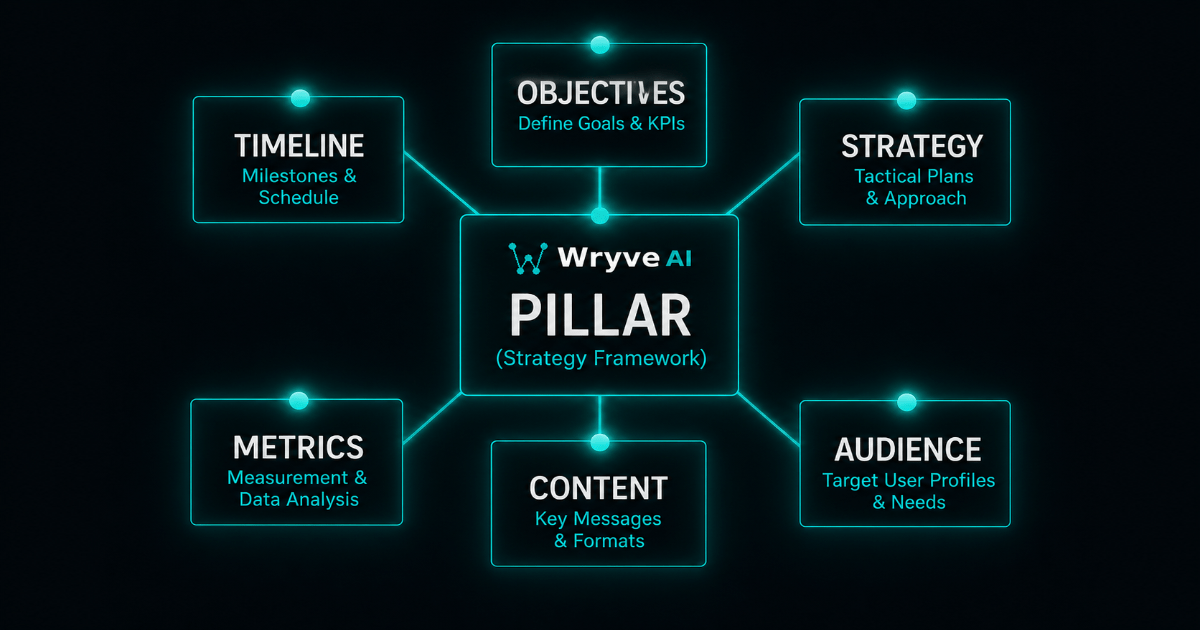
A topic cluster is a group of interconnected pages organized around a single pillar page that covers a broad subject comprehensively. The pillar page acts as the authoritative hub, answering the core question a searcher brings. Cluster pages then address specific subtopics, each linking back to the pillar with relevant anchor text.
This structure directly contradicts the old keyword silo approach. That method grouped pages by exact-match keywords, creating isolated islands of content. Search engines saw depth on a single term, not breadth of knowledge on a topic. The result was thin pages competing for the same ranking real estate.
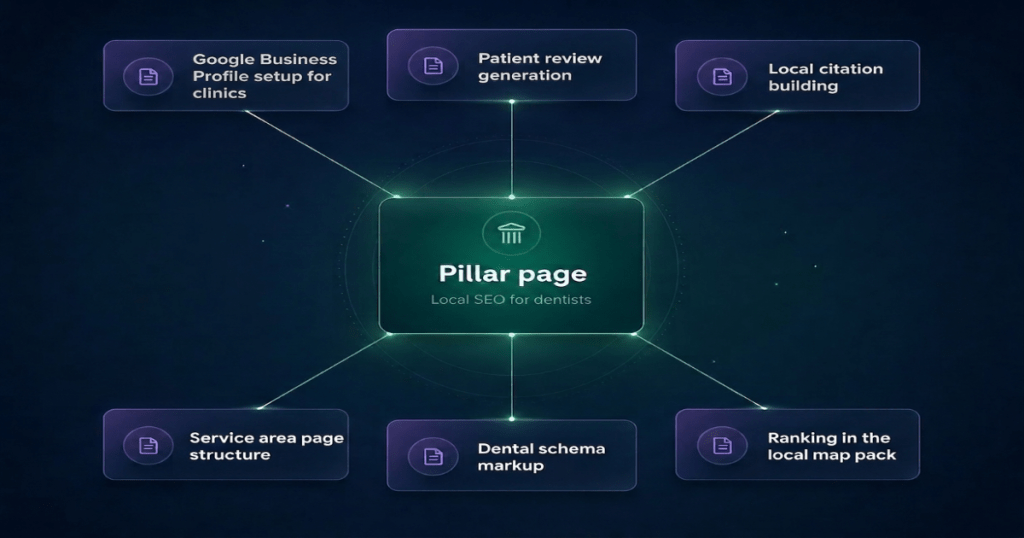
A topic cluster signals something fundamentally different to search engines. It demonstrates that the site understands the entire domain the question lives in. This is the difference between knowing a fact and knowing a field.
The practical implication is immediate. A single pillar page can anchor dozens of cluster pages, each targeting a distinct subtopic with its own search intent. The pillar earns topical authority by being the resource every cluster page points to. The cluster pages rank for specific queries while feeding authority back to the pillar.
The counter-argument comes from sites that rank without clusters. A recipe blog ranking for “best chocolate cake” proves this architecture is optional. What that argument misses is scale. That blog cannot rank for 200 baking-related queries without building 200 separate pages that never reinforce each other.
Start by auditing your existing content. Identify the pages already earning traffic on related subtopics. Those are your cluster candidates waiting for a pillar page. WryveAI’s SERP intelligence can surface these connections automatically, showing which existing pages share search intent patterns you can unify under one pillar.
Choosing a Core Topic That Demands a Cluster
The most common failure in a topic cluster strategy is choosing a core topic that cannot support the weight of a cluster. Most teams pick a topic because keyword volume looks good, then discover they have enough material for two thin pages.
A core topic must be broad enough to generate a dozen distinct subtopics. It must also be narrow enough that a single organization can claim genuine expertise. The sweet spot lives at the intersection of audience pain and your specific authority. A university building an admission guide cluster does not write about “higher education.” It writes about “graduate admission requirements for international students.” That is a topic with depth, search demand, and a clear owner.
The best core topics come from problems your audience cannot solve with a quick answer. Look at support tickets, sales call transcripts, and recurring questions. Those pain points signal a topic deep enough to sustain a cluster. Keyword volume follows genuine demand, it does not create it.
A strong core topic requires a competitive landscape with room for your voice. If every competitor has a pillar page on the same topic, the cluster will struggle to earn visibility. The better move is a topic where existing content answers the surface question but leaves deeper questions unanswered. That gap is where a cluster earns its authority.
An example from higher education topic clusters shows how institutions build clusters around specific admission stages rather than generic “admissions” content. The difference between a cluster that ranks and one that disappears is whether the core topic was chosen for its depth or its volume.
Researching Subtopics That Fill Real Gaps
Most guides tell you to research topics and stop there. The difference between a cluster that ranks and one that collects dust is whether you find subtopics your competitors missed. A topic cluster strategy only works when every supporting page fills a genuine gap in the existing search results.
Step 1. Analyze competitor pillar pages for missing subtopics. Pull the top three ranking pages for your core topic and list every angle they cover. The gaps between them are your opportunities.
Step 2. Mine Google’s People Also Ask boxes and related searches for question-based subtopics. These reveal the exact queries real searchers bring. A subtopic that answers a specific question almost always earns better engagement than one built from keyword data alone.
Step 3. Use topic cluster research tools to identify content gaps automatically. SERP intelligence tools like those built into WryveAI analyze what ranks and what does not, surfacing subtopics with low competition and clear search intent. This step separates clusters built on guesswork from clusters built on data.
Step 4. Prioritize subtopics by search intent alignment. A subtopic with high search volume but mixed intent, some searchers want a definition, others want a tutorial, will dilute your cluster. Choose subtopics where the intent is clean and the pillar page can answer the core question completely. Completing this process turns a vague topic idea into a structured content plan. Each subtopic earns its place by filling a real gap, not by matching a keyword list.
This process also reveals why most clusters fail. The gaps competitors miss are rarely the obvious ones. They are the subtopics that require deeper subject knowledge to identify, the questions only an expert would know to ask.
WryveAI surfaces these gaps by analyzing SERP structure rather than keyword volume alone. The tool identifies subtopics where top-ranking pages provide weak answers, giving every supporting page a clear path to outrank established competitors.
Building the Pillar Page That Earns Links
A pillar page that tries to cover everything ends up covering nothing well. The instinct to include every related subtopic is the fastest way to produce a resource that satisfies no one. A pillar page must answer one core question completely, not a dozen questions superficially.
Length matters only when depth accompanies it. A 5,000-word page that skims across fifteen subtopics signals shallowness to both readers and search engines. The structure that works is the one that treats the pillar page as a definitive answer to the single question a searcher brought.
Every paragraph must serve that answer. Every section must advance the reader toward resolution. If a piece of information does not help the reader understand the core topic more completely, it belongs on a cluster page instead.
The pillar page also links out to each cluster page with anchor text that mirrors the subtopic. This is not optional. The internal links tell search engines that the pillar page is the hub and the cluster pages are the spokes. A pillar page without outgoing links to cluster content is just a long article pretending to be strategic.
Thin pillar pages fail because they try to be everything to everyone. The best ones commit to a single authoritative stance on the core topic and let cluster pages handle the nuance. This approach mirrors what Conductor teaches about topic cluster architecture, the pillar earns authority by being the definitive destination, not the exhaustive one.
The question is not whether the page is long enough. The question is whether the reader leaves feeling the core question was answered completely. That feeling earns links, shares, and ranking momentum..
Interlinking That Signals Topic Depth
Internal linking is the mechanism that transforms a collection of individual pages into a cohesive topic cluster. Without deliberate interlinking, the pillar page and its supporting pages remain isolated fragments of content that search engines interpret as unrelated. The cluster never forms.
A topic cluster strategy fails if the links between pages do not communicate semantic relationships. Each cluster page must link to the pillar page using anchor text that describes the specific subtopic covered. The pillar page must link back to every cluster page, creating a two-way connection that search engines use to map topic depth.
Anchor Text That Signals Intent
Generic anchor text like “click here” or “learn more” tells search engines nothing about the relationship between pages. Use descriptive anchor text that names the subtopic exactly. A cluster page about “on-page SEO fundamentals” should link to the pillar page with the phrase “on-page SEO fundamentals”, not “this guide.” Precision in anchor text is how authority flows through the cluster.
The Authority Distribution Loop
When the pillar page earns backlinks from external sites, those links pass authority through the internal links to every cluster page. This distribution loop means every page in the cluster benefits from the pillar’s authority. A cluster page that ranks poorly on its own can gain ranking power simply by being linked from a strong pillar page.
Scaling Without Manual Effort
Manually linking every new cluster page to the pillar and vice versa becomes unsustainable as the cluster grows. This is where internal linking automation becomes essential. WryveAI handles this systematically, ensuring every new cluster page receives the correct anchor text and bidirectional connection without manual oversight. The cluster stays structurally sound at any scale.
What Happens Without Structure
Publishing cluster pages without enforcing linking discipline creates a content graveyard. Search engines see orphaned pages with no connection to the pillar, and the cluster never gains the topical authority it was designed to build. The research and writing effort is wasted.
Monitoring Cluster Performance Over Time
A topic cluster strategy is not a project with a finish line. It is a continuous optimization cycle that demands regular attention to what the data reveals. Build a monitoring routine around these actions to keep the cluster earning its place in search results.
- Track pillar page rankings. The core topic ranking determines whether the entire cluster has a foundation to stand on.
- Monitor cluster page rankings for subtopics. A drop in one cluster page signals a content gap a competitor has filled.
- Measure organic traffic growth to the entire cluster. Isolated page traffic matters less than the aggregate trend across all interconnected pages.
- Check internal link health. A broken link between a cluster page and the pillar page severs the authority flow that makes the structure work.
- Identify new subtopic opportunities from search query data. The queries bringing traffic to the pillar page often reveal subtopics the cluster does not yet cover.
- Review search feature changes. A featured snippet or People Also Ask box that appeared for a cluster page changes the optimization target for that page.
These actions reveal something the rankings alone will not show. A cluster can hold steady positions while slowly losing relevance because the subtopics have shifted and the content has not.
Set a quarterly review cycle for monitoring cluster performance. Pick one day to run through the list, adjust the weakest pages, and add one new subtopic that the search data has surfaced since the last review. That cadence keeps the cluster alive..
The real risk is not a sudden ranking drop. It is the slow drift that happens when a competitor publishes a better subtopic page and the search results shift without a dramatic signal. WryveAI’s content gap analysis surfaces these shifts automatically. The tool compares the cluster against top-ranking competitors and flags subtopics where the existing content has fallen behind in depth or relevance.
Your Next Move: Build One Cluster That Works
A topic cluster strategy that works and one that fails are separated by one thing: the research you do before writing a single word. You now know the difference between a cluster that signals depth and a collection of pages that signals noise.
The risk of doing nothing is not just flat rankings. It is watching competitors who built one focused cluster capture the search visibility you spent months chasing with scattered articles. One cluster that earns authority outperforms twenty articles that do not.
Pick one core topic today. Research its subtopics using the gap-finding methods covered here. Build that single cluster before you scale anything else. Let that one cluster prove the model works.
Every claim in this article was checked against a real source before it was published.
WryveAI researches live search results, writes source-verified content, and publishes straight to WordPress, all in one platform.
Try WryveAI Free →No credit card required.
Frequently Asked Questions About Topic Cluster Strategy
What is a cluster topic?
A cluster topic is a broad subject area that serves as the central pillar for a group of interconnected, subtopic-focused pages. The goal is to build a semantic web of content that demonstrates deep expertise on that single subject to both readers and search engines.
What is content cluster strategy?
Content cluster strategy is the process of organizing a website’s content around core pillar pages, with each pillar supported by multiple cluster pages that link back to it. This structure signals topic authority to search engines by creating a clear, interconnected hierarchy of information.
How do I choose a core topic for a cluster?
Choose a core topic that is broad enough to support at least ten distinct subtopics but narrow enough for your team to claim genuine expertise. The best core topics come from real audience pain points and search intent gaps, not from keyword volume alone.
How often should I update a topic cluster?
A topic cluster should be reviewed quarterly to check for ranking shifts, broken internal links, and emerging subtopic opportunities. Regular updates prevent the cluster from losing relevance as search behavior and competitor content evolve.


