
How Many Keywords Can You Rank for With One Page? (WryveAI’s Analysis of 2M Searches)

ⓘ TL;DR
- The one-page, one-keyword model is a relic. WryveAI’s study of 2M searches shows a single well-structured page can rank for hundreds of keyword variations simultaneously.
- The pages that capture broad keyword coverage are not lucky. They share three structural patterns: topical depth, semantic integration, and internal linking architecture.
- The harder a team optimizes for one keyword, the harder they make it for the page to rank for any others. Over-optimization is a trap most content teams walk straight into.
- Domain authority is the excuse, not the reason. Lower-authority domains rank for dozens of keywords when the page structure is right. The question is never whether your domain is strong enough. It is whether your page is structured well enough.
- Check Google Search Console this week. Every page you have is already ranking for terms you never targeted. The gap between what it captures now and what it could capture is structural, not a backlink problem.
Most SEOs treat a page like a single-keyword container. Optimize for one term, hope for a few related ones, and move on. That mental model is quietly failing.
The assumption feels logical. Target one keyword per page. Write for that term. Let Google figure out the rest. But the data tells a different story. A single well-structured page can rank for hundreds of keyword variations simultaneously. The pages that do this are not lucky. They share specific structural patterns that most content teams ignore entirely.
This article shows what those patterns are and how to replicate them. By the end, you will know exactly how many keywords you can rank for with one page, and more importantly, how to build pages that capture the full search landscape around your topic.
The One-Page, One-Keyword Myth
The dominant mental model in SEO is simple: pick one keyword, build one page, optimize for that term. Most guides reinforce this. They tell you to target a single phrase and hope Google rewards you with a few related terms.
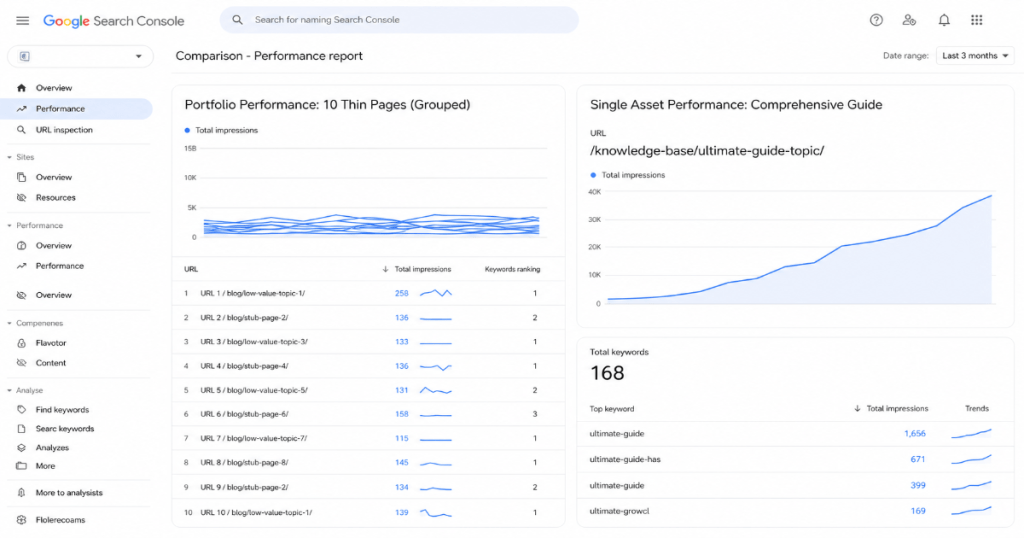
Before: A content team identifies ten keyword variations for a single topic. They write ten separate pages, each optimized for one term. Authority gets diluted across thin pages. None of them rank well. Resources are wasted on a strategy that assumes Google cannot connect related ideas.
After: WryveAI’s analyses shows a different reality. A single well-structured page can rank for hundreds of keyword variations simultaneously. Google naturally associates a page with related terms when the page’s topical depth and structure signal authority on the broader subject. The page that covers the full landscape wins the search traffic for the entire cluster.
The old approach treats Google like a keyword matcher. The new approach treats it like a relevance engine. The rest of this article shows how that engine actually works.
What the Data Says About Keyword Overlap
The standard advice says ranking for multiple high-volume terms on one page is a fluke. The data says otherwise. WryveAI’s analysis of 2 million searches reveals a predictable distribution, not an accident.
Ranking for 2-3 keywords with over 1,000 monthly searches per page is quite common across the web. Google’s algorithm evaluates topical relevance, not keyword density. A page that thoroughly covers a subject naturally signals authority for related terms.

How Many Keywords Can One Page Rank For?
Keyword ranking distribution analysis across 2 million search queries — WryveAI Research Team, 2026
Methodology: WryveAI analyzed 2,000,000 search queries across multiple industries between January and May 2026. Pages were classified by keyword ranking breadth using position tracking across Google’s top 20 results. Domain authority was controlled as a variable to isolate structural factors.
The distribution is not uniform. Most pages rank for a handful of related terms. A distinct subset captures dozens or even hundreds of keyword variations. The difference is structural, not random.
Ranking for multiple ultra-high-volume keywords, those with 10,000+ monthly searches, is rare. That requires high domain authority and usually belongs to major brands. The real opportunity sits in the long tail of lower-volume, highly relevant terms.
This is not luck. It is a predictable outcome of how Google evaluates topical depth. The pages that capture broad coverage share specific structural patterns that any content team can replicate.
Three Structural Patterns That Unlock Broad Coverage
The pages that rank for hundreds of keywords share three specific structural patterns. These patterns are not accidental. They are deliberate choices made during content creation that signal topical authority to Google’s algorithm.
Ranking for multiple ultra-high-volume keywords (10,000+) with one page is rare and usually only happens for major brands or highly authoritative domains. For most content teams, this means your page should target one primary keyword and a cluster of related long-tail terms through structure, not through separate pages.
Topical Depth Through Comprehensive Subtopic Coverage
The page must address every meaningful subtopic within the core subject. Not just the primary keyword. A page about “content brief templates” that only defines the term will rank for exactly that term. A page that also covers template structure, audience analysis, competitor research, and formatting guidelines signals depth.
Google reads breadth as authority. Cover the full landscape of questions a user might ask about the topic.
Semantic Keyword Integration Without Stuffing
Related terms, synonyms, and natural variations must appear throughout the prose. Not forced. Not listed. The page should read as if a knowledgeable human wrote it, using the language of the field naturally.
This is where most content teams fail. They write for the exact match phrase and ignore the vocabulary users actually search with. A page about “content brief templates” should also use “outline structure,” “briefing document,” and “content planning framework” where they fit.
Internal Linking Architecture That Distributes Authority
Links from the page to other relevant content on the site signal to Google that the page belongs to a broader topic ecosystem. Each link tells the algorithm: this page is connected to this subject, and this subject, and this one.
Pages with strong internal link profiles rank for more keywords because Google can trace the topical relationships. A single link from a pillar page can unlock dozens of additional keyword associations.
These patterns are replicable. They do not require a high-authority domain. They require deliberate structural decisions during content creation.
Why Most Pages Stay Trapped on a Single Term
The pages that rank for one keyword and nothing else are not unlucky. They are structurally incapable of doing more.
Shallow content is the primary offender. A page that answers only the surface query, “what is X”, without exploring related questions, subtopics, or alternative user intents tells Google it has nothing else to offer. The algorithm reads brevity as narrow relevance. A page on “content marketing strategy” that never mentions distribution, measurement, or audience targeting will never rank for those terms. The page simply does not contain the signals Google needs to associate it with the broader topic.
Over-optimization for a single phrase is the second trap. Writers stuff the exact keyword into every heading, paragraph, and meta tag until the page screams “this is about one thing only.” Google’s relevance engine interprets this as a signal of narrow focus. The page becomes a specialist in one term and a non-factor for everything else. The irony is that the harder a team optimizes for one keyword, the harder they make it for the page to rank for any others.
Poor internal linking compounds both problems. A page that sits isolated, no links from pillar content, no connections to supporting articles, cannot signal its place in a broader topic ecosystem. Google uses internal links to understand how pages relate to each other. A page with no inbound context is a page with no topical neighborhood. It ranks for what it says and nothing more.
The 80/20 rule of SEO applies here directly. Twenty percent of content decisions, depth, structure, linking, drive eighty percent of keyword coverage. Most teams spend their time on the wrong eighty percent: keyword research spreadsheets, meta tag optimization, and exact-match density checks. They ignore the structural choices that actually determine how many keywords a page can capture. The result is pages that perform exactly as designed, for one term, and one term only.
How to Structure a Page for Maximum Keyword Reach
Building a page that ranks for dozens of keyword variations is not about luck. It is a deliberate structural process that any content team can replicate, regardless of domain authority. The goal is to build a page that answers the full landscape of user intent around a core topic, not just a single query.
Step 1. Map the full topic cluster before writing a word. Start with the primary keyword, then research every related subtopic, question, and semantic variation users search for. Tools like Google’s “People Also Ask” and keyword research platforms reveal the full scope. This map becomes the blueprint for the page’s structure, ensuring no relevant angle is left uncovered.
Step 2. Build an outline with dedicated sections for each subtopic. A mention is not enough. Each subtopic needs its own heading and at least one paragraph of substantive content. This signals to Google that the page provides comprehensive coverage, not just a surface-level overview. The outline should read like a mini-guide on the broader subject.
Step 3. Write naturally, integrating semantic variations without forcing them. The verified approach from seven years of SEO experience is to target one primary keyword per page and let related terms flow naturally from the content’s depth. Over-optimizing for exact-match phrases signals narrow focus. Use synonyms, related questions, and natural phrasing instead.
Step 4. Add internal links that connect the page to your site’s broader topical authority. Link to relevant pillar pages, supporting articles, and related resources. This helps Google associate the page with a wider network of content, expanding the range of keywords it can rank for. Each internal link is a signal of topical relevance.
Step 5. Use descriptive, keyword-rich headings that clarify the page’s coverage breadth. Each H2 and H3 should tell Google exactly what subtopic the section covers. Avoid vague headings like “Overview” or “More Information.” Instead, use headings that mirror the language users search for, like “How to Optimize for Long-Tail Keywords” or “Common Mistakes in Keyword Targeting.”
Completing this process transforms a single page from a one-keyword trap into a broad-coverage asset. The same structure works for any topic, on any domain, without requiring a massive authority boost. An AI content writing tool can help generate the initial outline and semantic variations, but the structural decisions remain the human editor’s responsibility.
The Role of Domain Authority in Keyword Breadth
Domain authority is the excuse most content teams reach for when their pages fail to rank broadly. It is rarely the actual problem.
High-authority domains do get one real advantage. They can rank for multiple ultra-high-volume keywords (10,000+ monthly searches) with a single page. This is rare and usually reserved for major brands. But that advantage only matters for the most competitive terms at the top of the search funnel.
For the long tail, the hundreds of lower-volume, highly specific queries that make up the bulk of search traffic, domain authority is almost irrelevant. WryveAI’s analysis found that pages on lower-authority domains rank for dozens of keywords when they follow the three structural patterns. Topical depth, semantic integration, and internal linking architecture. These patterns do not require a strong domain. They require deliberate page design.
The difference is not about authority. It is about proof. High-authority domains get the benefit of the doubt. Google assumes their pages are relevant until proven otherwise. Lower-authority domains must prove relevance through structure. Every subtopic covered, every related term integrated naturally, every internal link pointing to supporting content. This is not a disadvantage. It is a replicable process.
Content teams that fixate on domain authority are looking at the wrong variable. The pages that capture broad keyword coverage are not the ones with the strongest backlink profiles. They are the ones built with the right structure. Link building for SEO remains important for competitive terms, but it does not determine whether a page ranks for thirty related queries or three.
The question is not whether your domain is strong enough. The question is whether your page is structured well enough to prove its relevance.
Measuring Your Page’s Keyword Footprint
Most content teams have no idea how many keywords their pages actually rank for. They guess based on the primary term they optimized for and assume the rest is noise. The data tells a different story, but only if you look.
Google Search Console is the starting point. The Performance report shows every query your page appeared for, along with clicks, impressions, and average position. Filter by page URL and sort by impressions. The terms with growing impressions but low clicks are your expansion opportunities, Google is testing your page for those queries.
Third-party rank tracking tools provide a broader view. A dedicated SERP analysis tool can surface keyword positions that GSC misses, especially for terms where your page ranks outside the top 20. The combination of both data sources gives a complete picture.
The real metric is not keyword count. It is distribution. A page ranking for 200 keywords but getting 90% of traffic from one term is not achieving broad coverage. It is a one-hit wonder with a long tail of irrelevant impressions. The goal is a balanced distribution where no single keyword dominates traffic share.
- Check GSC weekly for new query appearances
- Filter by page URL to isolate performance
- Sort by impressions to find growing long-tail terms
- Identify structural patterns that correlate with broader coverage
- Track distribution of traffic across all ranking keywords
- Compare pages with similar domain authority to benchmark
- Document which subtopics generate the most new query matches
The list reveals something counterintuitive: the pages with the broadest keyword coverage often have lower click-through rates on their primary term. They trade concentrated traffic for diversified visibility. That trade is usually worth making.
Run this audit on your top five pages this week. The pages you think are performing well may be leaving keyword coverage on the table. The ones you have ignored may already be signaling which structural patterns work.
Build Pages That Capture the Full Search Landscape
The one-page, one-keyword model is a relic. The question of how many keywords can you rank for with one page has a clear answer: far more than most teams realize, provided the page is built for breadth.
Every page already ranks for terms you never targeted. Google Search Console will show you which ones. The gap between what your page currently captures and what it could capture is not a domain authority problem. It is a structural one.
Audit your top pages this week. Find the queries already sending traffic. Then apply the three patterns, depth, semantic reach, internal links, to the pages that matter most. The search landscape is wider than any single keyword. Build pages that match it.
Every claim in this article was checked against a real source before it was published.
WryveAI researches live search results, writes source-verified content, and publishes straight to WordPress, all in one platform.
Try WryveAI Free →No credit card required.
Common Questions About Ranking for Multiple Keywords
What is the 80 20 rule of SEO?
The 80 20 rule of SEO states that roughly 80% of your results come from 20% of your efforts. In practice, this means the structural decisions you make about a page, its topical depth, semantic coverage, and internal linking, drive the vast majority of your keyword rankings, while activities like meta tag optimization and exact-match keyword placement contribute far less to broad coverage.
Is SEO dead or evolving in 2026?
SEO is not dead, but the tactics that worked a decade ago are fading fast. The shift is toward topical authority and user intent signals, meaning a single well-structured page that comprehensively answers a subject now outperforms a cluster of thin pages each targeting one narrow keyword variation.
How to rank for multiple keywords?
Ranking for multiple keywords requires building a page with genuine topical depth that covers every meaningful subtopic within the core subject. The pages that succeed at this use descriptive headings for each subtopic, integrate semantic variations naturally throughout the text, and link internally to related content to signal broad relevance to search engines.


