On-page content formats answer engines actually favor
ⓘ TL;DR
- On-page content formats are no longer a stylistic choice. They are an extraction decision. Publishing in the wrong format means answer engines skip your page entirely, regardless of how good the content is.
- Answer engines do not read prose. They extract facts from structures. A wall of text buries the answer. A comparison table delivers it in under a second.
- The formats that earn citations share one trait: extractability. Comparison tables, numbered listicles, how-to steps, FAQ sections, and product specs all break information into discrete, self-contained units.
- Format selection is schema selection. If the format you chose has no dedicated schema type, it will struggle to earn citations. Treat them as the same decision.
- Informational queries need steps. Commercial queries need comparisons. Transactional queries need filters. The winning format is the one that closes the gap between the query and the decision fastest.
Publishing a guide that answer engines cannot parse is the same as publishing nothing at all. The content exists. The effort was real. But the extraction layer that powers modern search simply skips over it.
Most teams still treat on-page content formats as a stylistic choice. Pick a template. Write the words. Hit publish. That approach worked when search engines read every word on the page. They do not anymore. Answer engines extract, cite, and summarize. They scan for structure, not volume. A wall of text is invisible to them.
This article reveals which on-page content formats earn those citations and which get ignored. The framework here is not a list of best practices. It is a decision system for matching format to how answer engines actually consume content. By the end, you will know exactly which format to use for each search intent and why the wrong one costs you visibility.
Why answer engines read content differently
The shift from keyword-matching to intent-extraction rewrites every rule about on-page content formats. Answer engines do not read pages the way a human scans a search result. They pull facts from structured signals, not from narrative flow.
A wall of text fails because it buries the extractable answer. The engine must guess which sentence contains the relevant point. That guess is often wrong.
Format is now a ranking signal. Not indirectly, through user engagement metrics. Directly, through whether the structure of the page allows clean extraction. A listicle with clear subheadings wins over a dense essay every time, even when the essay contains better information.
The engine does not evaluate prose quality. It evaluates whether the answer is findable within the structure. A paragraph that requires three sentences of context before the key claim appears is a paragraph the engine will skip.
This changes what content teams should optimize for. Not keyword density. Not word count. Extractability. The question shifts from “does this page rank?” to “can an answer engine pull the answer from this page in under a second?”
Most teams still optimize for the old game. The teams that optimize for extraction win the new one.
The formats that earn the most AI citations
Not every content format survives extraction. Answer engines pull from structures they can parse, not from prose they must interpret. The right on-page content formats determine whether your page becomes a cited source or just another result in a long list.
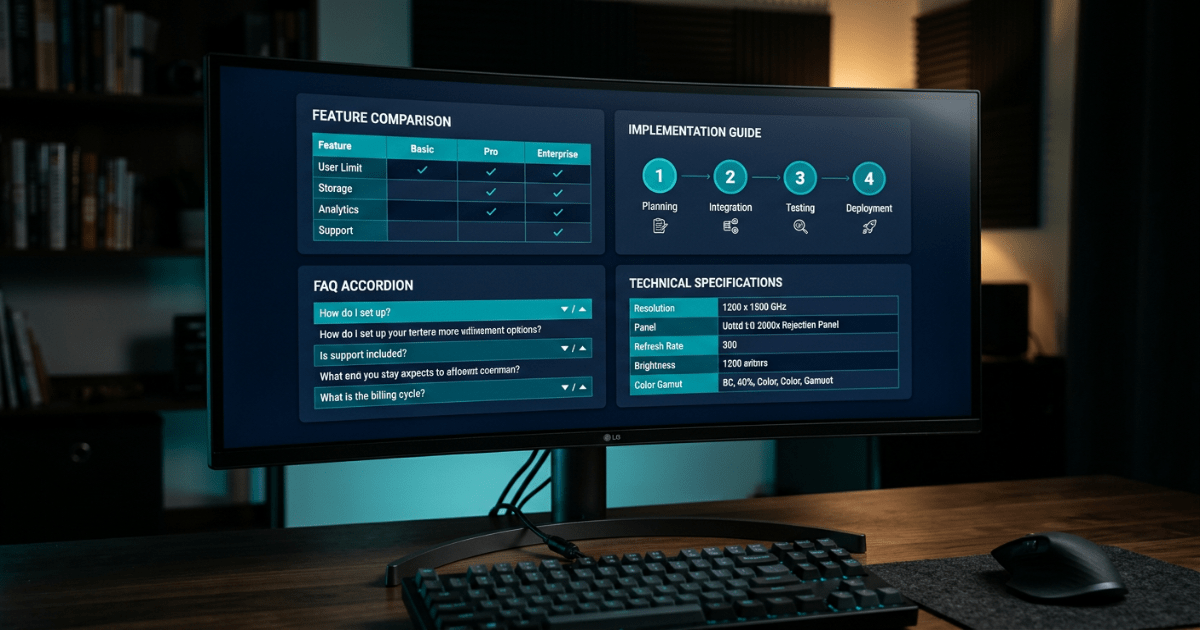
Comparison content leads. It earns the highest citation rate across AI search tools because it presents clear trade-offs in a predictable structure. A side-by-side table of pros, cons, and verdicts gives an answer engine exactly what it needs to generate a response. HubSpot research confirms this pattern holds across multiple AI platforms.
The formats that consistently earn citations share one trait: extractability. Here are the ones that work:
- Comparison tables
- Numbered listicles
- How-to guides with steps
- Product pages with specs
- Category pages with filters
- FAQ sections with answers
- Review pages with ratings
The pattern is clear. Every format on this list breaks information into discrete, self-contained units. Answer engines do not infer meaning from paragraphs. They extract facts from structures.
Audit your current library against this list. Replace narrative walls with one of these formats for every page targeting a search term. The format itself becomes the ranking signal.
How to match format to search intent
Matching on-page content formats to search intent is where most strategies break down. Teams pick a format because it worked last time, not because it fits what the searcher actually needs. The result is content that answers the wrong question in the wrong structure.
Informational intent demands formats built for scanning. Listicles and how-to guides work because they break knowledge into discrete, self-contained steps. A reader searching for “how to configure a firewall” does not want a 2,000-word essay on network security history. They want numbered steps they can follow immediately. The format mirrors the cognitive load of learning.
Commercial intent requires formats that support comparison. The searcher knows what they need but not which option to choose. Comparison tables and product pages win here because they present trade-offs side by side. A wall of prose describing two software tools forces the reader to mentally extract differences. A table does the work for them. This is why recipe pages with structured ingredient lists and step counts outperform narrative recipe posts, the format itself signals extractability to both the reader and the search engine, as detailed in Screaming Frog’s guide to on-page content structure.
Transactional intent needs formats that remove friction. Category pages and reviews serve this purpose because they organize options by criteria the buyer already has in mind. A searcher looking for “best running shoes under $100” does not want a brand story. They want a filtered list with prices and ratings. The format should let them act, not think.
The winning format is the one that reduces the distance between the query and the decision. Informational queries need steps. Commercial queries need comparisons. Transactional queries need filters. Pick the format that closes that gap fastest.
Structuring each format for extraction
Getting the format right is only half the work. The structure inside that format determines whether an answer engine can actually pull the facts cleanly. This process turns any on-page content format into something an AI can cite without hesitation.
Write headlines that answer engines can parse
Short, declarative headlines work better than clever or vague ones. A headline like “Benefits of X” tells an answer engine nothing. “X reduces processing time by half” gives it a fact to extract. The CT.gov style guide recommends headlines under eight words for this reason, clarity over creativity.
Break every section into scannable chunks
Answer engines scan for topic shifts. A wall of text covering three different points under one heading forces the AI to guess where one idea ends and another begins. Each chunk should cover exactly one claim. If a paragraph introduces a second claim, it needs its own heading.
Use HTML tables for comparisons and data
Tables are the most extractable format an answer engine can encounter. A comparison table with clear column headers lets the AI pull pros, cons, and verdicts without interpreting prose. Narrative paragraphs describing the same comparison get summarized poorly or ignored entirely.
Make every section self-contained
Answer engines do not read sequentially. They pull a section in isolation and decide whether it answers the query. Each section must state its claim, support it, and conclude without relying on context from earlier sections. A section that starts with “As mentioned above” is a section that fails on its own.
Place the key takeaway first in every section
The first sentence of each section is the one most likely to be extracted. Lead with the fact, the number, or the conclusion. Background and context belong after the point, not before it.
Completing this process means every piece of content becomes a reliable source for answer engines. The structure does the extraction work for them. The only thing left is to choose the right format for the intent.
Why comparison content dominates ChatGPT
Comparison content earns citations at a rate that makes every other format look like a footnote.
Answer engines do not read for narrative satisfaction. They scan for structure. A comparison table delivers pros, cons, and a verdict in predictable positions. The engine extracts the winner, the trade-offs, and the deciding factor without parsing a single paragraph of prose. That is why comparison content dominates ChatGPT citations more than any other format.
Narrative formats fail here because they bury the answer. A review that builds context over three paragraphs before stating a preference forces the engine to guess which sentence carries the verdict. Guessing introduces error. Error reduces citation probability. Comparison content removes the guesswork entirely.
The structure itself does the work. A table with two columns and a clear winner row tells the engine everything it needs. No inference required. No summary needed. The format is the answer.
This advantage compounds. Every time an answer engine cites a comparison, it trains itself to prefer that structure for similar queries. The format becomes self-reinforcing. Teams still writing narrative comparisons are competing against a format that answers before the question finishes loading.
The role of structured data in format selection
Structured data is a standardized format for providing explicit clues about the meaning of a page to search engines. It uses a shared vocabulary, typically Schema.org, to label specific elements like a recipe’s ingredients, a product’s price, or an event’s date. This markup tells an answer engine exactly what kind of content it has found and which facts to extract.
Most teams treat structured data as a technical checkbox. They add schema to a page after the content is written, as an afterthought. That order is backwards. The format of the content determines which schema types are even available. A narrative article about a recipe has no natural schema. A properly formatted recipe page with ingredients, steps, and cook time maps directly to the Recipe schema type. The format choice constrains the schema opportunity.
Choosing a format with a dedicated schema type creates a structural advantage. Answer engines do not guess when they find a page with Recipe schema. They know exactly where the ingredient list lives and how to cite it. The same logic applies to product pages, event listings, and FAQ sections. Each has a schema type that turns a wall of text into a predictable data structure. The Screaming Frog guide on on-page content makes this connection explicit: schema and format are not separate concerns.
The implication is direct. When selecting an on-page content format, ask what schema type it supports. If the answer is none, the format will struggle to earn citations. If the answer is a dedicated type like Product or Recipe, the format has a built-in extraction path. Format selection is schema selection. Treat them as the same decision.
Adapting your content strategy for 2026
The old playbook for on-page content formats treated every keyword the same way. A single long-form article, written to a word count target, published, and forgotten. That approach worked when search engines read pages like a human skimming a book, looking for thematic relevance, not extractable facts.
That era is over.
Before:
Teams would assign a writer to produce a 2000-word guide for a commercial keyword like “best project management software.” The result was a narrative wall, an introduction, a list of features buried in paragraphs, a conclusion. The answer engine could not find the comparison it needed. The page earned a citation rate near zero. The format choice was invisible because no one thought of it as a choice at all.
After:
The same keyword gets a comparison table with rows for pricing, integrations, and user ratings. Each row stands alone. The answer engine extracts the data in under a second. The page earns citations across multiple AI search results. For an informational query like “how to manage remote teams,” the format shifts to a numbered listicle with one tactic per heading. Every section is self-contained and ready for extraction. The format is chosen before a single word is written.
Format is now a strategic decision, not a stylistic one. The teams that treat it as such will dominate AI citations. The teams that do not will keep writing content that answer engines ignore. This is not a prediction. It is the current state of search, and the human editing requirement for E-E-A-T only reinforces the need for clear, extractable structures that demonstrate real expertise.
Build content that answer engines want to cite
On-page content formats are not a design decision. They are an extraction decision.
The format that makes an answer engine’s job easiest is the format that earns the citation. Everything else is noise.
Audit your content library this week. Find every page built as a narrative wall, long paragraphs, no structure, no scannable anchor points. Those pages are invisible to answer engines. Replace them with structured formats that let AI pull facts cleanly. The teams doing this now will own the citations in six months.
The framework exists. The formats are known. The only missing piece is the decision to stop writing for readers who do not exist yet and start writing for the extraction layer that decides what those readers see. Use the SEO content brief framework to build every new piece around extractability from the first outline. That is the strategic shift. Everything else is decoration.
Every claim in this article was checked against a real source before it was published.
WryveAI researches live search results, writes source-verified content, and publishes straight to WordPress, all in one platform.
Try WryveAI Free →No credit card required.
Frequently Asked Questions About On-Page Content Formats
What are the 4 types of content?
The four primary content types are written, visual, audio, and interactive, each serving a distinct purpose in how information is delivered and consumed. Written content includes blog posts and articles, visual content covers images and videos, audio spans podcasts and recordings, and interactive content involves quizzes and calculators.
Is SEO dead or evolving in 2026?
SEO is not dead; it is evolving from keyword optimization toward intent extraction and structured content formats that answer engines can parse directly. The shift means teams must now prioritize format selection and extractable structures over traditional tactics like meta keyword stuffing.
What is the 70 20 10 rule in content?
The 70 20 10 rule allocates content efforts across three categories: 70% to proven formats that drive current results, 20% to emerging formats that show potential, and 10% to experimental formats that test new approaches. This framework helps teams balance reliable performance with strategic innovation without overcommitting to untested formats.
What are the 4 types of keywords?
The four keyword types are informational, navigational, commercial, and transactional, each mapping to a distinct stage in the user’s search journey. Matching the right on-page content format to each keyword type, such as listicles for informational queries and comparison tables for commercial ones, determines whether answer engines cite the content or skip it.