
YouTube SEO Content Strategy: 4 Steps to Rank Without Guessing
ℹ️ TL;DR
- A successful YouTube SEO content strategy begins with reading search intent before filming rather than adding keywords post-publish.
- Execute a 4-step framework focusing on SERP research, script retention design, search packaging, and post-publish analytics decisions.
- Align titles, descriptions, chapters, and thumbnails directly with search intent to capture viewer interest and boost watch time.
- Analyze performance metrics post-upload to systematically decide whether to refresh content, repackage titles and thumbnails, or move on.
Searching for “how to rank a YouTube video” returns a wall of advice about tags, thumbnails, and upload timing. None of it fixes the real problem: the video was chosen before anyone checked what viewers wanted. A YouTube SEO content strategy starts earlier than the edit suite and ends later than the publish button.
Creators treat optimization as a publishing-day checklist. They film on instinct, then bolt on keywords and hope the algorithm notices. That sequence is backwards, and it explains why so many well-produced videos stall at a few hundred views.
This article lays out a four-step YouTube SEO content strategy you can run on your next upload. You’ll learn how to read search intent before you film, structure for retention, package for search and browse, and use post-publish data to decide whether to refresh or move on.
Why YouTube SEO Fails Without a Content Plan
Upload day is the worst time to start doing SEO. By the time a video is live, the topic, the angle, and the opening seconds are locked, and no tag or thumbnail tweak can rescue a subject nobody was searching for.
YouTube ranks on watch time, click-through rate, and what viewers do after the video ends. Those signals are decided long before the camera rolls: which query you targeted, how the first line of the script confirms the promise, whether the structure holds attention. Optimization after upload can only adjust the packaging, never the product.
Creators who pick a topic first and hunt for keywords later are guessing with extra steps. A viewer who searched “how to fix a dripping faucet” and lands on a vlog about home repair projects leaves in seconds.
The fix is treating search intent as the input, not the label. The query shapes the script, the chapters, and the payoff before anyone writes a shot list. Building a content plan that ranks starts with the results page, not the editing timeline.
Scale makes this harder. Pew Research tracks American social media usage patterns, and the audience arriving on YouTube is broad enough that a single channel competes across dozens of intent types at once. Skip the planning layer and every upload becomes a coin flip. The channels that grow predictably are the ones where the search results page is the first draft.
Start With Search Intent, Not Keywords
Search intent is the reason a viewer typed a query and what they expect to watch when they hit enter. It covers the format they want, the depth they need, and the outcome they’re chasing. A keyword is just the phrase. Intent is the job behind it.
Keyword research without intent reading produces videos that match a phrase but miss the viewer. Retention drops in the opening minute because the video isn’t what the searcher pictured, and the algorithm reads that drop as a signal the video doesn’t belong on the results page. A creator who skips this step builds a YouTube SEO content strategy on labels instead of demand.
Read intent straight from the results page. Note which formats dominate, whether tutorials, reviews, or reactions fill the top slots, and how long the ranking videos run. A query that returns tight walkthroughs wants a walkthrough, not a rambling vlog. Question-style queries are rising as people search by asking, so mirror the question in your title and description. This is where long tail keyword intent pays off most, because a specific question carries a specific expectation.
A university guide to YouTube SEO treats intent matching as the foundation every other optimization rests on. Skip it and the tags, captions, and chapters all optimize the wrong video. Intent reading is step one of the four-step system, and every later step depends on it.
The 4-Step YouTube SEO Content Strategy
Ranking stops being a gamble when every upload runs the same loop. The loop starts with the search results page and ends with a decision you can defend. Run it in order and each step hands the next one better inputs.
Step 1. Research the query and the videos already ranking for it. Open the results for your target query and study what wins: format, length, angle, and the exact promise each title makes. You are hunting for the gap those videos leave open, not a template to copy.
Skipping this step is why channels guess. The official video SEO guidance treats the search results page as the starting point for a reason. Do the SERP analysis for ranking intent before you write a single line of script.
Step 2. Design the video around retention. Script the opening seconds to confirm the viewer landed in the right place, because a viewer who doubts that leaves immediately. Then structure the body into chapters so each section pays off and the session continues. A video built to be finished beats a video built to be clicked.
Step 3. Package the upload to match the script. Write a title that states the payoff, then a description that expands on it in plain language. Add accurate captions and chapters that mirror what the script actually covers. Packaging that contradicts the video is the fastest way to lose the retention you earned in step two.
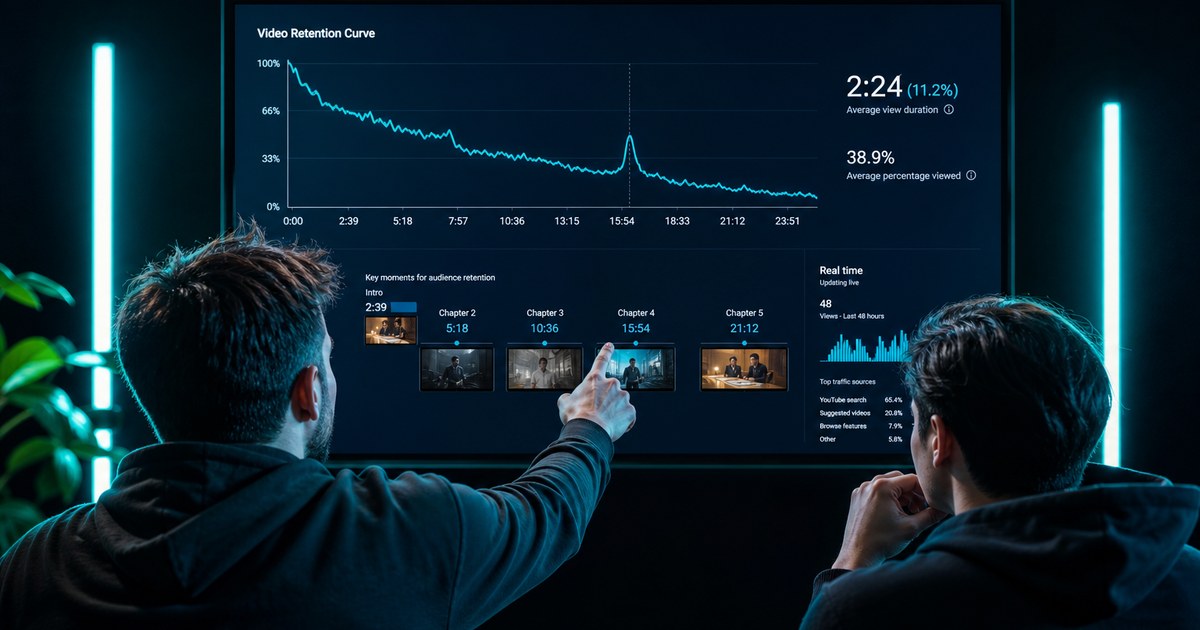
Step 4. Measure after publish and make one decision. Read the retention curve and the traffic sources, then choose: refresh the video, swap the thumbnail, or move on. Publishing without that decision is the guess this whole process exists to remove.
Each step feeds the next, and the data from step four becomes the research for step one. Finish all four and the next upload starts with evidence instead of instinct. That is what separates a channel that compounds from one that keeps starting over.
Package Every Upload for Search and Browse
A strong video with weak packaging loses to a weaker video with strong packaging. The elements below carry the search weight, and the order matters because the thumbnail decides whether the rest gets seen.
- Title as promise. State the payoff the viewer gets, not the topic you covered.
- Description opening lines. The first visible lines earn the click in search results, so front-load the answer before the boilerplate links.
- Captions and transcripts. These serve deaf viewers and give the platform indexable text, a rare double win.
- Chapters mapped to queries. Split the video where viewers actually search, so each segment answers a distinct question.
- Tags as topic clarifier. Treat them as a minor signal that disambiguates a word like “crash” or “draft,” never as a ranking lever.
- Thumbnail as the gatekeeper. Nothing else matters if the thumbnail loses the scroll, so test it with real viewers first.
Five of six items are decided before you hit record, which means packaging is a planning discipline disguised as an upload task. A free creator training library covers each of these elements in depth, and the official YouTube skill courses reward the same discipline.
Build the title, description, and chapter markers into your content optimization framework before filming, not after. Then treat the thumbnail as a live variable: swap it after publish, watch the click-through shift, and keep the version that wins.
Build Videos People Finish, Not Just Click
Retention is the part of a YouTube SEO content strategy treated as editing, when it’s actually scriptwriting. A video that ranks and then loses viewers halfway through teaches the algorithm it was the wrong answer. The recommendation engine reads completion and session behavior as proof of fit, so the script has to earn the next minute before the edit room sees it.
Confirm the promise fast. The seven-second rule is a promise-keeping rule, not a hook trick. If the title says you’ll fix a bad audio setup, show the fix working before you explain why it broke. Viewers who feel misled leave early, the worst place to lose them.
Cut the setup. The intro explaining what the video covers, thanking subscribers, and restating the title is dead weight. Start where the value starts and fold context into the middle. That single edit decision does more for watch time than any thumbnail swap.
Structure the middle so each section pays off before the next begins. A viewer deciding whether to stay is asking what they get in the next thirty seconds, and a chapter that resolves cleanly answers that. The official YouTube Data API reference exposes the metrics that reflect this, but the fix happens in the script, not the dashboard.
End by pointing somewhere. A closing card to the next video keeps the session alive, and session time tells YouTube your channel is worth recommending. Pair that with human editing for quality and the video earns the recommendation it gets. Overpromise in the title and you’ll attract viewers who leave before the payoff, worse than never reaching them.
Use Analytics to Decide What to Fix Next
Every upload leaves three moves: refresh the video, repackage the thumbnail and title, or walk away and film something new. The data picks the move. Instinct picks the wrong one.
Refresh wins when retention dips early but click-through holds. Viewers wanted the video and left because the middle failed. Re-cut the opening, tighten the sag, republish. It costs an afternoon instead of a shoot day.
Repackaging wins when impressions are healthy and click-through is flat. YouTube is showing the video and nobody is biting. Swap the thumbnail, rewrite the title as a sharper promise, and watch the same impressions convert differently. Leave the video alone.
Moving on wins when both numbers are weak and traffic sources show almost no search. The topic missed. Take the lesson into the next script and stop paying rent on a dead upload.
Creators skip this read and film the next video on feel, the guessing this system exists to remove. The videos with the strongest click-through and watch time are your template, not your trophy. Study what they share and repeat it deliberately.
WryveAI’s content refresh and Search Console insights turn that post-publish read into a decision instead of a hunch, and its approach to content freshness and citations keeps a refreshed video from drifting out of date. Audience research on YouTube confirms how wide the viewing base has become, so demographics in Studio tell you who to make the next one for. Refresh beats a new upload whenever the audience already showed up. Film new only when the data says nobody came.
Where Tools Fit and Where They Don’t
Four tool categories sit under a working YouTube SEO content strategy, and each fails when you expect it to make decisions for you. Budget and hours get wasted on software that reports data while the judgment call stays unfilled.
Keyword research and testing tools are genuinely useful at surfacing data. Neither will tell you which angle beats the video already ranking, because that call needs context no dashboard holds. Software reports; the creator decides.
Production is where teams lose the most hours, and where WryveAI earns its place. Scripts get built from live SERP research and verified sources before the camera rolls, with brand voice and direct publishing handled in one place. Teams running AI search optimization tools alongside it keep research and writing in the same pipeline instead of stitching them together by hand.
Run the Four Steps on Your Next Upload
Ranking stops being luck once you stop treating a topic as a hunch. The four steps turn a YouTube SEO content strategy into something you can repeat on every upload, whether the last video hit or flopped. That repeatability is the whole advantage.
Skip it and you’re back to filming whatever feels right, then hoping the algorithm agrees. Do it and the next video starts with evidence instead of a guess. The gap between channels that grow and channels that stall is rarely talent. It’s whether the process runs before the camera does.
Pick the next video you plan to film. Open the search results page for its target query before you write a single line. Note the formats, the lengths, the angles already ranking. Then script, package, and measure against what you found. Run the steps once and the guesswork starts to disappear.
Every claim in this article was checked against a real source before it was published.
WryveAI researches live search results, writes source-verified content, and publishes straight to WordPress, all in one platform.
Try WryveAI Free →No credit card required.
YouTube SEO Questions Creators Actually Ask
How to do SEO in YouTube?
Doing SEO on YouTube means matching a video to what people already search for, then proving through watch time that the video answers the query. The part most people miss is that the title and description get indexed like a web page, so the exact phrasing a viewer types belongs in both.
What is the 80/20 rule in SEO?
The 80/20 rule in SEO holds that a small share of your pages or videos drives most of your traffic, so effort should follow the winners. On YouTube this shows up in your traffic sources report, where a handful of uploads usually account for the bulk of impressions and watch time.
What is the YouTube 7 second rule?
The seven second rule says a viewer decides whether to keep watching within the first few seconds, so the opening must confirm the promise of the title immediately. A cold open that restates the title in different words wastes those seconds and invites the drop-off.
What is the best content strategy for a YouTube channel?
The strongest channel strategy picks a narrow topic lane, publishes on a repeatable schedule, and builds every video from real search demand rather than inspiration. A working YouTube SEO content strategy treats each upload as a test whose results feed the next topic choice, which is what separates channels that compound from channels that restart.


