How Content Freshness Affects AI Citations in 2026
ⓘ TL;DR
- AI citation tools prioritize freshness over authority. A thinner post published last month will be cited over a deeper, well-researched piece from two years ago every single time.
- Publication date, update frequency, and citation velocity are the three signals that determine whether AI tools like ChatGPT and Scite will ever surface your content.
- Stale content does not just get ignored. Zero citation velocity tells AI tools the community has moved on, and the content gets actively deprioritized regardless of its original quality.
- The fix is a refresh cadence, not more new content. Evergreen topics need a quarterly update. Fast-moving fields need monthly attention. A date change alone is not enough — new body content is required.
- Every published piece now carries a maintenance obligation. Content freshness is a continuous process. A static library is a dead asset, and the tools are already deciding which sources make the cut.
Content teams pour weeks into research, writing, and revision. The result is a thorough, carefully argued piece on a topic that matters. Then nothing. No AI tool cites it.
No chatbot references it. A thinner post published months later gets picked up immediately.
The gap is not quality. It is freshness. Most creators assume authority and depth determine what AI citation tools choose to reference. That assumption is wrong.
Publication date and update frequency carry more weight than most writers realise.
This article explains how AI citations actually work, why recency matters more than backlinks, and how to make your content the source tools like ChatGPT and Scite choose to cite. You will walk away with a concrete strategy for keeping your work visible in an AI-driven discovery landscape.
Why AI Citation Tools Prefer Recent Sources
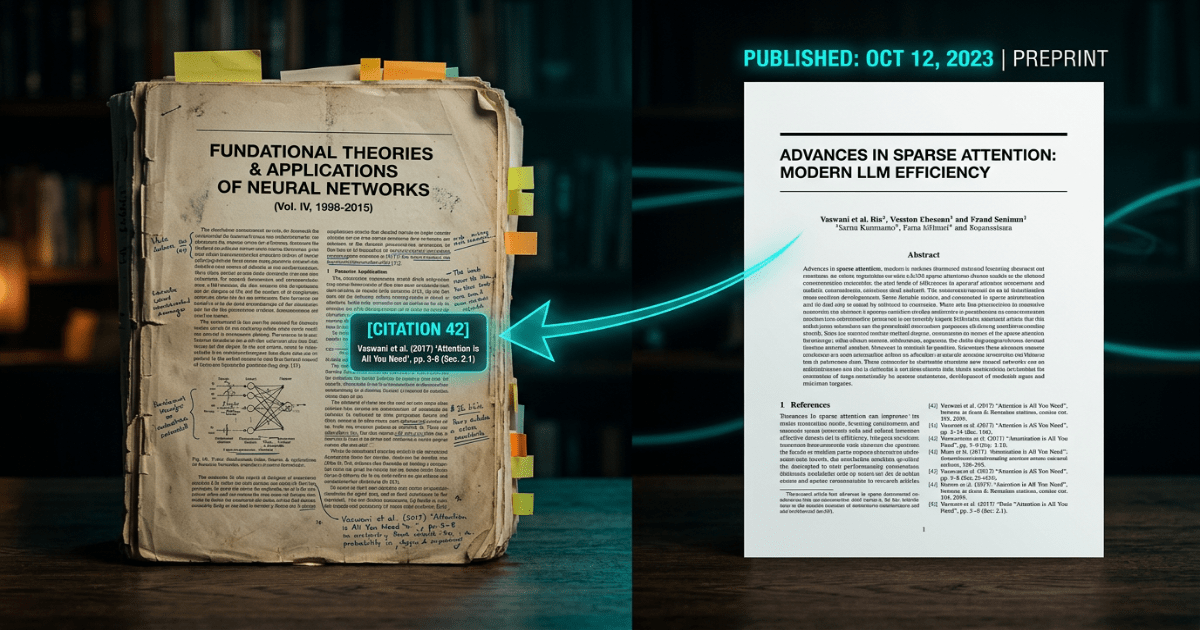
Content freshness is not a nice-to-have for AI citations. It is the primary signal these tools use to decide what to reference. An authoritative piece from 2022 will lose out to a thinner 2025 post every time, because the algorithm treats recency as a proxy for current consensus.
The mechanism is straightforward. AI citation tools like Scite’s Smart Citations evaluate three freshness signals: publication date, update frequency, and citation velocity. A recent publication date tells the tool the content reflects current knowledge. Frequent updates signal ongoing community engagement.
Citation velocity, the rate at which new citations accumulate, confirms that other researchers are still finding the work relevant.
Scite makes this explicit. Its Smart Citations show whether a study is supported or contradicted by later work. Recent studies are weighted more heavily in that analysis. A paper from 2023 that has been contradicted by three 2025 studies will appear less authoritative than a fresh study that aligns with the current consensus.
The tool is not judging quality alone. It is judging relevance to the present conversation.
ChatGPT’s browsing mode works similarly. When it searches the web for sources, it prioritizes content with clear publication dates and recent timestamps. A blog post updated in 2026 will rank higher than a static post from 2021, even if the older post has more backlinks. The algorithm treats freshness as a trust signal.
Stale content is assumed to be less reliable, regardless of its original quality.
This creates a direct tension for content creators. The work that took the most research effort ages fastest. The piece that was updated yesterday, even with minimal changes, gets cited first. Freshness outranks depth in the AI citation hierarchy.
The Freshness Signal That Outranks Authority
Authority without freshness is invisible to modern AI citation tools. A well-researched, deeply authoritative piece from two years ago can sit untouched while a thinner, more recent post on the same topic gets referenced repeatedly. The mechanism that decides this has nothing to do with expertise and everything to do with how AI algorithms interpret consensus.
Consider a thorough 2022 article with substantial backlinks and genuine subject-matter depth. It covers every angle. It cites primary sources. It is the definitive guide on its topic.
Yet when an AI tool searches for a source to cite, that article does not appear in results. The tool sees the publication date. It sees no recent updates. It treats the content as stale, regardless of its quality.
The algorithm reads old publication dates as a signal that the field has moved on.
Now consider a 2025 article on the same topic. It has far fewer backlinks. It is less comprehensive. But it was published last month.
The AI citation tool surfaces it first. It gets cited by multiple tools. The newer piece becomes the reference point, not because it is better, but because the algorithm treats recency as a proxy for current consensus. Freshness outranks authority every time.
This is the gap most content creators miss. They invest in depth and backlinks while ignoring the one signal that determines whether AI tools will ever see their work. The fix is not to abandon authority. The fix is to update content regularly so the freshness signal stays active.
A piece that is refreshed every quarter keeps its citation value. A piece that is not updated loses it, regardless of how good it is.
How ChatGPT and Scite Decide What to Cite
Two major AI citation tools, ChatGPT and Scite, operate on fundamentally different freshness thresholds. Understanding that difference is the difference between being cited and being ignored.
ChatGPT in browsing mode scans the live web. It pulls from whatever is publicly accessible and indexable. The tool favors pages with clear publication dates and a history of frequent updates. A blog post published last week with a visible date stamp and fresh internal links stands a strong chance of being pulled into a response.
ChatGPT has no structured database behind it. It reads what is there, right now. That means a piece of content can be cited one day and dropped the next if a newer version of the same topic appears. The weakness is inconsistency.
ChatGPT does not verify whether the content it cites is accurate or contradicted by later research. It simply trusts recency as a proxy for relevance.
Scite takes a different approach entirely. It operates on a structured database of full-text research articles. Scite weights citations not just by recency but by context, whether the citing work supports or contradicts the original claim. This is the Smart Citations system in action.
A 2025 paper that contradicts a 2022 finding will be weighted more heavily than the older paper, even if the older paper has more total citations. Scite penalizes content that has not been cited recently because zero citation velocity signals irrelevance. The tool is more reliable than ChatGPT for academic contexts. But it is also slower to surface non-academic content and less forgiving of gaps in update history.
Both tools share one non-negotiable rule. Content that has not been updated in over a year is effectively invisible. ChatGPT will not find it in a web crawl. Scite will deprioritize it against fresher alternatives.
The takeaway is not about choosing one tool over the other. It is about understanding that every AI citation tool applies a freshness filter. The question is how strict that filter is and what signals trigger it.
The Cost of Stale Content on Citation Velocity
Citation velocity is the rate at which new citations accumulate around a piece of content. Fresh content generates high velocity, which AI citation tools interpret as ongoing relevance. Stale content generates zero velocity, and AI tools eventually drop it from their results entirely.
Consider a blog post published in 2023. It was heavily cited by researchers using Scite and by ChatGPT browsing mode. It contained original analysis and was referenced across multiple platforms. By 2026, that same post is invisible to those same tools.
The post was never updated. No new data was added. No new citations accumulated. The citation velocity dropped to zero.
AI tools treat that as a signal that the content is no longer relevant, regardless of its original quality.
This is not a judgment on the content’s accuracy. AI citation tools do not evaluate whether stale content is still correct. They evaluate whether the community is still engaging with it. No engagement means no citations.
No citations means no visibility.
The solution is not to write better content. The solution is to maintain a rhythm of scheduled content refreshes that keep citation velocity alive. A piece updated quarterly signals to AI crawlers that the community still validates it. A piece left untouched for years signals abandonment.
Every content creator faces the same choice. Let citation velocity decay and watch AI tools forget your work. Or build a refresh cadence that keeps your content in the active pool. There is no third option.
What Happens When AI Cites Outdated Information
An AI citation tool that pulls from stale sources does not just repeat old facts. It actively propagates claims that may no longer be true, creating a cascade of misinformation. This is not a hypothetical risk, it is the current reality for any topic where knowledge evolves faster than content refresh cycles.
Medical content is the clearest example. A treatment guideline from 2020 might recommend a protocol that was superseded by clinical trials in 2023. When an AI tool cites that older source, it presents outdated care standards as current best practice. Evaluating information sources becomes impossible when the citation itself is the problem.
The reader has no way to know the cited study has been contradicted.
Technical documentation suffers the same fate. A configuration guide written for a software version two releases ago will reference deprecated commands and removed features. AI tools that cite this content send developers down dead ends. The time wasted debugging against obsolete instructions is real, even if the cost is hard to measure.
The damage extends beyond individual errors. Every citation of outdated content trains the next generation of AI models on stale data. This creates a feedback loop where old information gets reinforced as authoritative simply because it was cited. Breaking that loop requires content creators to treat freshness as a trust signal, not a convenience.
AI citation tools are beginning to flag content age explicitly. Some platforms now display a warning when a cited source is more than a few years old. The message to content creators is unambiguous. Freshness is not optional, it is the mechanism through which readers and AI tools alike assess reliability.
Building a Freshness Strategy for AI Citations
Most content libraries are filled with dead assets. Pieces that were once cited regularly now sit invisible to AI citation tools. The fix is not writing more. The fix is a systematic process that keeps your existing work alive and citation-worthy.
Step 1. Audit your content for citation potential. Not every page needs to be cited by an AI tool. Identify the pieces that answer specific, searchable questions, tutorials, data-driven analyses, definitive guides.
These are the candidates. Everything else is supporting material. Run the audit once, then repeat it quarterly.
Step 2. Set a refresh cadence by content type. Evergreen topics need a quarterly check. Fast-moving fields, technology, medicine, policy, require monthly updates.
The cadence is not arbitrary. It matches how quickly the knowledge in that field becomes outdated. A piece that answers a stable question can go longer. A piece that references current events cannot.
Step 3. Add new signals of freshness. Update the publication date. Add new examples.
Replace old citations with recent ones. AI crawlers look for structural evidence of recency, not just a changed date, but new content in the body. A paragraph added to the top of the article signals more freshness than a date change alone.
Step 4. Monitor citation velocity. This is the metric that matters. Use Google Search Console to track which pages gain visibility.
Use Scite to see if your content is being cited in research contexts. When velocity drops, that piece needs attention. When velocity rises, the refresh strategy is working.
Step 5. Publish new content into gaps. Look at what AI tools are currently citing from competitors. Find the question those sources answer poorly or incompletely.
Write the version that fills that gap. The goal is not to outrank competitors on search. The goal is to become the source AI tools prefer over the alternatives.
This process turns a static library into a living asset. Content that gets refreshed regularly becomes the default reference. That is the only position worth occupying.
The Future of AI Citations and Content Freshness
The next generation of AI citation tools will not just prefer fresh content, they will actively penalize content that has stopped moving. The shift from recency as a ranking signal to freshness as a continuous requirement is already visible in how tools like Scite and Semantic Scholar weight their results. Within two years, the threshold for what counts as “current” will shrink from months to weeks.
Real-time freshness signals are the obvious next step. A page published today and updated next week will carry a different signature than one published today and left untouched. AI crawlers already detect structural changes and new metadata. The logical extension is a system that tracks not just when content was published, but when it last received meaningful edits.
A blog post that has not been touched in six months is a dead asset in this model.
Blockchain-verified timestamps sound like overengineering until you consider the problem they solve. AI citation tools need to trust that a publication date is real, not gamed. A timestamp anchored to a distributed ledger removes the incentive to backdate content or falsify update records. Some academic preprint servers are already experimenting with this.
The adoption curve is faster than most expect.
The more immediate change is automated deprioritization. Tools will begin flagging content by age and update frequency without human review. An article that has not been refreshed in over a year will simply stop appearing in citation results. This is not speculation.
The infrastructure already exists in how search engines handle freshness. AI citation tools are following the same playbook with tighter thresholds.
The strategic implication is uncomfortable for anyone who treats content as a one-time investment. freshness as a continuous process means every published piece carries a maintenance obligation. The alternative is gradual invisibility, not because the content is wrong, but because the system decided it was no longer worth citing. That is where the industry is heading.
The only question is whether content creators build the process now or scramble later.
Make Your Content the Source AI Tools Cite
The mechanism is now clear. Content freshness is the primary signal AI citation tools use to select sources. Authority without recency is invisible. The reader now understands that a static content library is a dead asset, regardless of its original quality.
This changes the calculation entirely. Every piece of content published today has a shelf life measured in months, not years. Treating freshness as a strategic advantage means the difference between being cited and being ignored. The risk of inaction is not just lost visibility, it is active deprioritization by the tools your audience trusts.
Audit your content library this week. Set a refresh schedule that matches your field’s pace. Make freshness a continuous process, not a one-time update. The tools are already deciding.
The only question is whether your content makes the cut.
Every claim in this article was checked against a real source before it was published.
WryveAI researches live search results, writes source-verified content, and publishes straight to WordPress, all in one platform.
Try WryveAI Free →No credit card required.
Frequently Asked Questions About AI Citations and Content Freshness
Is it okay to use AI for citations?
Yes, using AI for citations is acceptable, but only when the tool provides verifiable source links that can be independently checked. The risk is not the tool itself but the assumption that its output is accurate without verification. A responsible workflow treats AI-generated citations as a starting point, then confirms each source through direct access to the original publication.
Is there an AI that gives citations?
Several AI tools now generate citations, including Scite, Semantic Scholar, and ChatGPT’s browsing mode, each with different mechanisms for selecting and presenting sources. These tools do not all draw from the same pool of content. Scite pulls from a structured database of full-text academic articles, while ChatGPT’s browsing mode prioritizes recent web content with clear publication dates.
Is there a way to cite AI?
Yes, major style guides including APA, MLA, and Chicago have published specific formats for citing AI-generated content as a source. The format depends on how the AI was used. APA treats the AI as the author and requires the prompt text in the reference, while Chicago recommends a note or a credit line depending on the role the AI played in the work.
Does ChatGPT make up citations?
Yes, ChatGPT has been documented generating plausible-sounding citations that do not correspond to real publications, a phenomenon known as hallucination. This happens because the model prioritizes conversational fluency over factual accuracy when it cannot find a matching source. The safest approach is to treat every ChatGPT citation as unverified until the original source has been located and read.