
AI Content Strategy for Healthcare Brands vs. Traditional Tactics
ℹ️ TL;DR
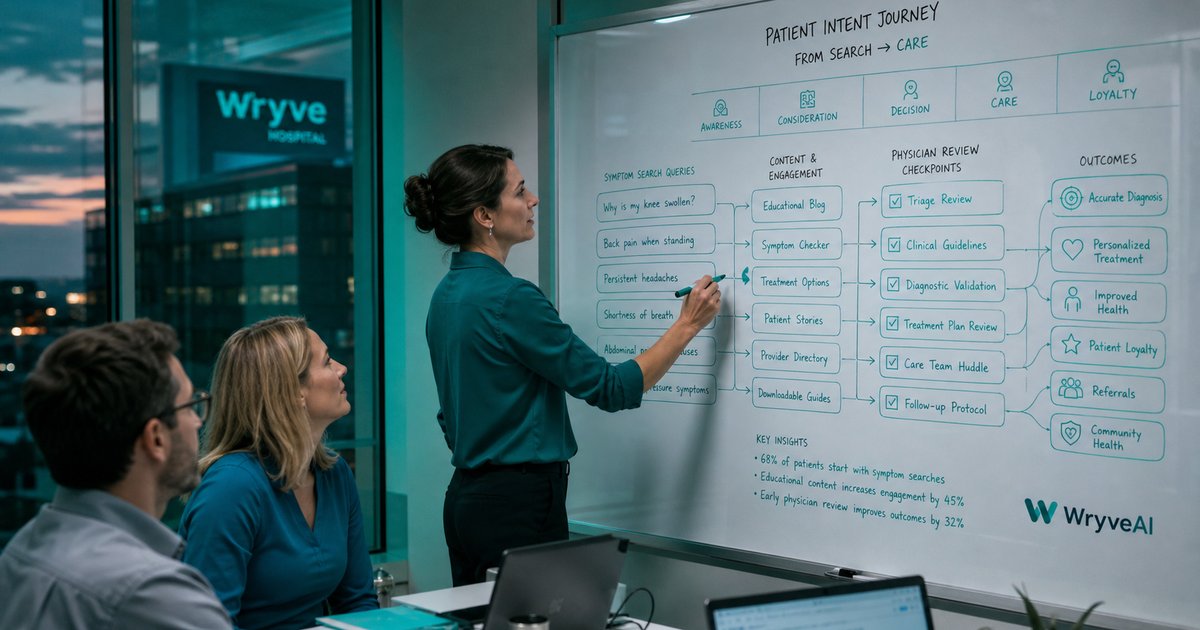
- Developing an AI content strategy for healthcare brands requires balancing production speed against strict clinical compliance and review burden.
- Traditional healthcare content excels at established clinical authority and named authorship but struggles with long-tail patient coverage.
- AI workflows excel at SERP research, structured schema markup, and rapid content updates, reducing research overhead for clinicians.
- Compliance rules from HIPAA, the FTC, and the FDA apply equally to AI-assisted and human-authored health claims.
- Combining automated research with mandatory physician review creates a defensible hybrid model built to survive audits.
A marketing director at a regional health system gets two proposals in the same week. One promises a physician-authored patient education series with a medical review board sign-off. The other promises an AI content strategy for healthcare brands that publishes faster than the competition can schedule a meeting.
Both pitches are selling a false choice. The real question is not whether AI writes your clinical content, but which workflow survives a compliance audit and an AI Overview at the same time.
This article compares an AI content strategy for healthcare brands against traditional tactics. You’ll see where each breaks, what compliance requires, and which workflow fits your team’s review capacity. Mayo Clinic publishes reviewed patient content under a named editorial board. That model works because the review process is the product, not overhead.
The Criteria That Decide This Comparison
An AI content strategy for healthcare brands fails in the same place every time, and it is never the writing. Pilots stall after the first batch of articles because nobody agreed on what “working” meant before the tools were switched on.
Teams pick a tactic first. They buy a platform, run a sprint, publish ten posts, then discover they cannot answer a basic question: did this reduce clinical review time or just move it downstream? Without agreed criteria, every result looks arguable. Five dimensions decide this comparison. Clinical accuracy and review burden. Regulatory exposure. Search and AI citation visibility. Adaptation speed. Production cost per asset.
These dimensions do not carry equal weight, and treating them as a scorecard is the second mistake. A single accuracy failure costs more than a year of ranking gains. Compliance and review capacity are filters, not line items. They eliminate options before the other three dimensions get a vote.
Consider what that means in practice. A health system weighing a symptom-checker content hub against a physician-authored FAQ series cannot compare them on cost per article alone. If the hub cannot route every claim through a named reviewer, it does not qualify, regardless of how well it ranks.
Adaptation speed is the dimension teams underestimate most. When a guideline shifts, a traditional library waits for the next review cycle. An AI-assisted workflow can flag affected pages and draft updates, but only if someone owns the trigger. That ownership question decides more than the tooling does.
Production cost per asset hides the real expense. Drafting is cheap. Verified sourcing, schema markup, and reviewer sign-off are not, and a content marketing strategy that budgets for drafting while ignoring review will overrun on every cycle. Agree on these five before choosing anything. Every comparison that follows in this article runs through them.
What Traditional Healthcare Content Still Does Well
An AI content strategy for healthcare brands gets compared against three traditional approaches that still hold ground: the physician-authored pillar page, the medical review board sign-off, and the referral-driven patient education library. Each protects something specific, and losing that protection costs more than the speed gained.

The physician-authored pillar page wins on named authorship. A cardiologist’s byline on a heart failure guide carries weight no generic draft can replicate. Patients forward those pages to family members, and referring physicians link to them without hesitation.
That same pillar page loses on maintenance. A single clinical update means reopening the draft, finding the original author, and waiting for their calendar to clear. Publication cycles stretch into months.
The medical review board sign-off protects traceable clinical sourcing. Every claim maps to a named reviewer and a documented approval trail. When a regulator or journalist asks how a statement was substantiated, the answer exists in writing.
The cost is throughput. Review boards meet on schedules, not on demand, and a queue of pending articles sits idle while a committee convenes. The human editing requirement becomes a bottleneck when volume climbs.
The referral-driven patient education library protects institutional trust. Health systems build these libraries over decades, and patients return to them because the source is known and stable. That trust does not transfer to anonymous content. Coverage is the weakness. These libraries answer the questions someone thought to write, leaving long-tail symptom and treatment queries unaddressed.
Traditional tactics win when credibility outweighs speed and the team has review capacity to spare. They lose when publication volume matters and long-tail coverage determines whether patients find you at all.
The counter-argument arrives fast: if traditional tactics work, why change anything? Because the search environment those tactics were built for no longer exists. An AI Overview now answers the query before a patient ever reaches the pillar page.
Mayo Clinic’s patient education pages still rank and still get cited. That durability comes from clinical authority paired with constant maintenance, not from the format itself. Strip the maintenance and the same page decays within a year.
Where an AI Content Strategy for Healthcare Brands Wins
An AI content strategy for healthcare brands changes the economics of production without lowering the clinical bar. The standards stay fixed. What shifts is how much research, coverage, and maintenance a team can afford per published asset.
- Live SERP and AI Overview research. Writers start from what patients actually type and what AI assistants already answer, not from an internal topic list. That removes the guesswork that wastes most of a drafting cycle.
- Long-tail symptom coverage. Traditional teams write the high-volume conditions and stop. AI workflows let a small team cover the specific, low-volume questions patients ask at the point of worry, where conversion intent is highest.
- Structured data and schema output. Clean markup gives AI assistants a machine-readable version of your clinical content. Pages that answer a question in structured form get cited in AI answers far more often than pages that bury the answer in prose.
- Refresh without a full rewrite. A guideline change normally triggers a new review cycle and draft. AI workflows flag affected sections, update the language, and route only changed claims back to a reviewer.
- Verified sourcing built into the draft. WryveAI builds every article from live SERP research and verified sources, so the writer starts with traceable references instead of assembling them after the fact. That separates a working program from generic output.
Read together, the list shows that AI does not replace clinical judgment. It removes the research and maintenance overhead that made judgment expensive to apply at scale. The wins hold only when a clinician or medical reviewer still signs off before anything goes live.
The counter-argument is that AI drafts introduce clinical errors faster than a team can catch them. That fear is real, and it kills programs that skip review routing.
Mayo Clinic’s content model pairs every published claim with a named clinical reviewer. An AI workflow that mirrors that structure, routing changed claims back to a specialist, keeps speed without loosening accuracy.
Compliance Rules Both Tactics Must Respect
An AI content strategy for healthcare brands does not get a pass on rules written before the technology existed. The constraint is not whether AI can be used, but what it can be pointed at. Compliance reshapes both sides of this comparison equally.
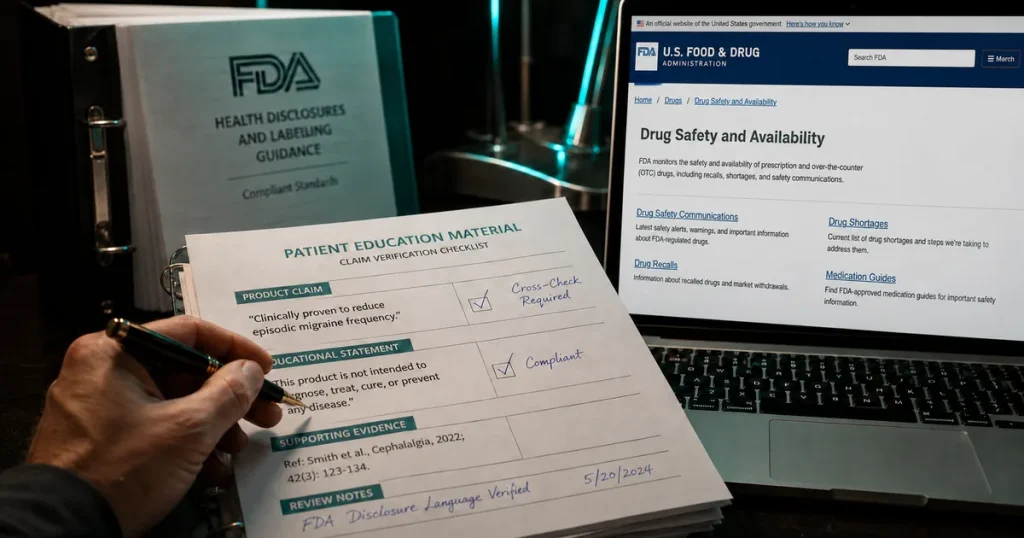
- HIPAA marketing limits. Protected health information cannot drive marketing communications without proper authorization, which restricts what patient data can feed any content workflow.
- FTC substantiation standard. Health claims need competent and reliable scientific evidence behind them before publication, not after a complaint arrives.
- FDA promotion rules. Anything promoting a regulated drug or device faces specific labeling and disclosure requirements that apply regardless of who drafted the copy.
- AI transparency expectations. Certified health IT now carries documented oversight requirements for predictive and AI-driven tools used in clinical contexts.
- Review layer timing. A reviewer who catches an unsupported claim before publication prevents the legal review that follows a published one.
The HIPAA marketing guidance and the FTC health claims guidance are the two documents worth reading before scaling anything. Both predate generative AI, and both still govern it.
Read together, the bullets expose a pattern that individual rules hide. Every obligation targets the claim, not the tool that produced it. A physician-authored page and an AI-drafted page face the same substantiation burden. Compliance is tool-agnostic, which is exactly why it catches teams off guard.
The practical answer is a review layer positioned before publication, not after. Route every draft through a named clinical reviewer who can verify sourcing and flag unsupported claims. Teams that skip this step are the ones behind AI content strategies that backfire.
The counter-argument arrives fast: internal review slows publishing, so teams route drafts around it. That shortcut fails the first time a claim reaches a patient without substantiation behind it.
Speed is not the constraint worth protecting. A published claim that violates FTC substantiation standards costs more to unwind than any review delay ever would. Build the reviewer into the workflow, not beside it.
Head-to-Head: AI Workflow vs. Traditional Tactics
An AI content strategy for healthcare brands and a traditional editorial pipeline fail on completely different rows of the same scorecard. The row where each approach collapses is the row that decides your liability.
| Dimension | Traditional Tactics | AI Content Strategy | Hybrid Workflow |
|---|---|---|---|
| Time to first draft | Weeks, queued behind clinician availability | Hours, generated from a brief | Days, drafted fast then reviewed |
| Clinical review burden | Heavy, every claim written from scratch | Heavy, reviewers correct unsourced claims | Moderate, reviewers verify cited sources |
| Cost per published article | High, physician hours dominate | Low to draft, high to remediate | Balanced, research automated |
| Long-tail patient questions | Sparse, budget caps coverage | Broad, built from live SERP data | Broad and reviewed |
| AI Overview and assistant visibility | Weak, unstructured prose | Strong, schema and direct answers | Strong, schema plus named author |
| Refresh cadence | Stalled, each update needs a new review round | Fast, but drift goes unchecked | Fast and gated |
| Audit readiness | Strong, paper trail intact | Weak without logging | Strong, sourcing and sign-off recorded |
The hybrid column wins most rows because it keeps a named clinician in the loop while AI handles research, drafting, and refresh. Pure AI wins one row only: speed. That advantage disappears the moment a claim needs defending, since FTC business guidance on health claims requires substantiation behind every health statement you publish.
WryveAI supports the hybrid model directly. Brand profile management holds your clinical tone and sourcing rules, and team workflows route each draft to a reviewer before it reaches WordPress. An AI content workflow that skips that routing step is not faster. It just moves the cost from drafting to legal review.
The cost row is where traditional pipelines quietly lose. A cardiology practice paying a physician $250 an hour to draft a statin explainer burns that money on writing, not medicine. The same article drafted in an hour and reviewed in ninety minutes costs a fraction of that. You are not buying words. You are buying clinician attention.
The Hidden Costs of Getting This Wrong
A bad ranking costs you traffic. A published claim you cannot defend costs you the content function itself. An AI content strategy for healthcare brands fails expensively when nobody owns the sentence a patient reads at 2am.
Unreviewed medical statements are the obvious hazard. A draft that says a supplement “supports immune function” reads harmless until someone with a compromised immune system acts on it. Then the failure stops being editorial. It becomes regulatory exposure, and the brand owns every word.
The quieter failure sits on the traditional side. A health system publishes a statin guidance page, the clinical guidance shifts, and the page sits untouched for years because every edit triggers another review cycle. Patients find stale instructions. Outdated content erodes trust faster than a missing page ever will.
Both failures compound. One accuracy incident pulls in legal, freezes the publishing calendar, and teaches leadership that content is a liability. The next campaign gets three extra approval layers. Velocity dies, and the team that fought for budget now defends why the budget should exist. Regulators have already moved on this question. The FDA guidance on AI oversight frames documented human review as an expectation, not a courtesy. Healthcare content sits inside that same logic.
The fix is structural, not editorial. A workflow that requires verified sourcing and a named reviewer before anything goes live removes the single point of failure. generic SEO articles skip that step because nothing in their pipeline forces it. Ask where clinical review happens in your current process. If the honest answer is “at the end, when someone remembers,” the next incident is already scheduled.
Consider the counter-argument directly: tighter review slows publishing, so teams relax the rules to keep pace. That trade is a trap, because the cost of one retraction dwarfs the cost of a slower calendar.
Epic Systems and Mayo Clinic both gate clinical content behind credentialed review before publication. The gate is slow by design. It is also why their patient-facing material survives scrutiny that sinks faster, looser competitors.
Which Approach Fits Your Healthcare Brand
An AI content strategy for healthcare brands only works when the team can guarantee clinical review before anything publishes. That single constraint eliminates more options than budget eliminates. Six team profiles follow, and each one lands on a different answer.
- Solo clinic, no reviewer. Traditional tactics fit here, because a physician who writes their own patient education pages is the review layer.
- Small practice with a contracted medical director. Hybrid works if the director commits to a standing review slot each week, not ad hoc sign-off.
- Multi-site health system with a review board. Hybrid is the only viable path, since the board already exists and AI can feed it researched drafts instead of blank pages.
- Digital health or device company under FDA scrutiny. Hybrid with documented oversight, because regulators now expect traceable human review of AI outputs, and the ONC AI transparency rule pushed that expectation into certified health IT.
- Agency running several healthcare clients. Hybrid at scale, but only when each client has a named clinical contact, otherwise the agency is absorbing liability it cannot defend.
- Any team without a reviewer. Traditional tactics, or nothing at all.
The pattern hiding in that list is that review capacity, not content volume, decides the approach. Teams keep shopping for the tactic with the best output and ignore the one input they cannot fake. Review capacity is the real budget line.
A team with a medical director on retainer and a team with nobody are not choosing between the same two options. They are choosing between different risk profiles entirely. The workflow has to match the oversight, or the oversight becomes theater.
Audit your current process before you change anything. Find where clinical review actually happens, and whether sourcing is traceable back to a named source. If the answer is vague, fix that first. WryveAI fits teams that want SERP-driven research and SEO brand marketing controls without removing the human review step, which is the only version of this that survives scrutiny.
Pick the Workflow You Can Defend in Public
An AI content strategy for healthcare brands is not a bet on technology. It is a bet on whether you can explain, on the record, how a specific claim reached a patient. That question arrives without warning. A journalist asks why your page called a supplement effective. A regulator asks who approved a symptom description. A patient asks which clinician signed off.
You need E-E-A-T, GEO, and AEO optimization that survives a compliance audit and an AI Overview. Start a WryveAI trial to build your next patient education article from verified sources.
Every claim in this article was checked against a real source before it was published.
WryveAI researches live search results, writes source-verified content, and publishes straight to WordPress, all in one platform.
Try WryveAI Free →No credit card required.
Healthcare Marketers Questions, Answered
How can AI be used in healthcare marketing?
An AI content strategy for healthcare brands handles the research-heavy stages: live SERP analysis, long-tail patient question mapping, schema generation, and refresh scheduling. The clinical claim itself still needs a named human reviewer, which is the line most teams blur when they scale too fast.
Which AI is best for content strategy?
The tool matters less than the source layer feeding it, because a model with no access to live search results writes from training data alone. A platform that builds every draft from current SERP research and verified sources, like WryveAI, produces output a medical reviewer can actually check.
What are the 7 steps in creating a content strategy?
A workable sequence runs: define the audience, audit existing content, cluster keywords by intent, map competitors, set a review workflow, assign publishing ownership, and schedule refresh cycles. Step five is the one healthcare teams skip, and it is the step that determines whether anything else survives an audit.
Does AI content need medical review before publishing?
Yes, any AI-assisted content that touches symptoms, treatments, dosages, or device claims requires clinical sign-off before it goes live. Skipping that step shifts the risk from an editorial problem to a regulatory one, and regulators already expect documented human oversight of automated outputs.


