
What Is a SERP? Search Engine Results Pages Explained
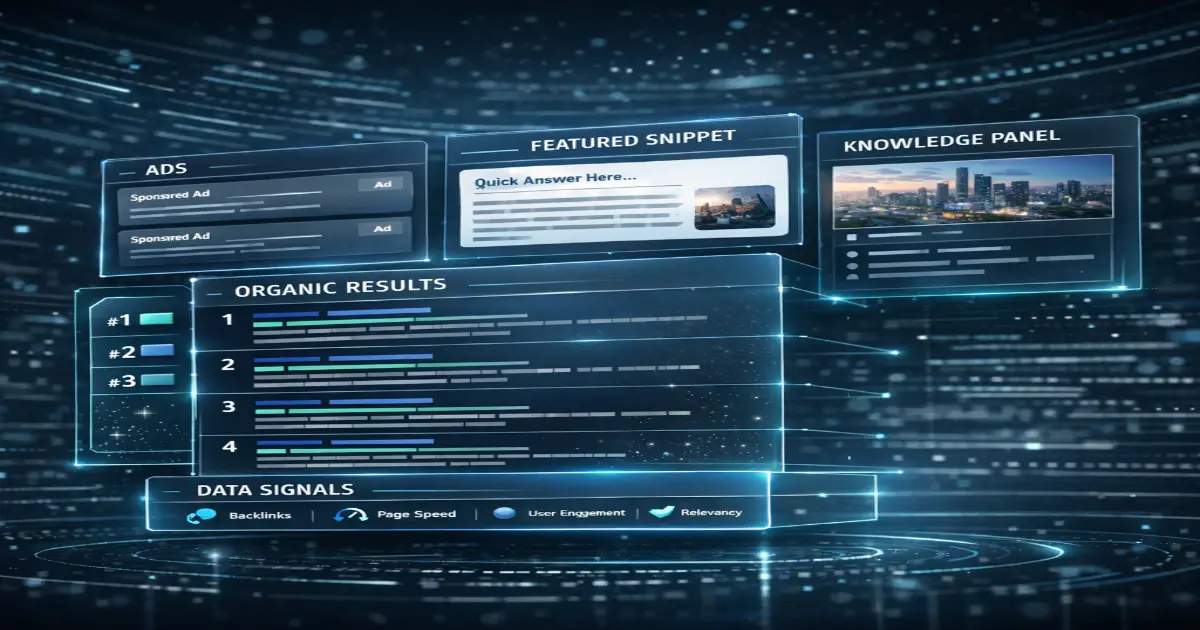
Table of Contents
Page 1 is where you want to be. That single result page decides your visibility. It is the critical battleground for every search query.
A SERP is a search engine results page. It is the direct answer to a user’s question. Google assembles it from billions of index entries. The composition is dynamic and competitive.
This guide explains what is a SERP beyond the basic definition. You will learn the strategic components that influence ranking. You will understand how features like featured snippets impact user engagement. You will know how to analyze this digital landscape for advantage.
The Digital Battlefield for Visibility
A SERP is the decisive arena where search intent meets commercial opportunity. This page determines which content gains authority. Modern SERPs are dynamic interfaces packed with features that influence user decisions.
Organic listings compete with paid ads and featured snippets. Securing the top organic position remains critical. Yet a featured snippet can capture over 50% of clicks for a query. This redefines the goal from ranking first to owning the best answer format.
Chasing generic keyword rankings is a legacy tactic. Success requires reverse-engineering the SERP features for your target queries. You must ask if the search deserves a list, table, or direct definition. Your content must fulfill that specific format. Queries with shopping ads signal commercial intent, demanding tailored page architecture.
Mastering this battlefield shifts focus from visibility to answer ownership. You design for the user’s moment of decision. This approach directly impacts your ability to capture valuable traffic and sustain growth.
What is a SERP: The Key Benefits Worth Knowing
Understanding a SERP provides strategic clarity. This page is a dynamic ecosystem, not a static list. Its features are designed to satisfy user intent instantly.
Immediate Intent Fulfillment
A modern SERP often provides direct answers. Features like featured snippets resolve queries without a click. This challenges the idea that top rankings guarantee traffic.
Competitive Intelligence Dashboard
Every SERP is live competitive analysis. It shows who Google deems authoritative. You can analyze content formats and keyword usage. These insights refine your own strategy.
User Behavior Blueprint
SERP features map user expectations. Local packs indicate geographic intent. Product listings signal commercial readiness. Reverse-engineering this creates perfectly aligned content.
Measurable Performance Arena
Your SERP position is a direct performance metric. Movement reflects your SEO efficacy. Tracking feature changes offers early signals. This transforms abstract work into tangible results.
How a SERP Works in Practice
A search engine results page (SERP) is assembled in real-time to answer a query. The process involves three key stages:
- Query Interpretation: The engine parses the query’s intent and scans its index for relevant pages, going beyond simple keyword matching.
- Ranking & Feature Injection: Pages are scored and ranked. Relevant SERP features like featured snippets, map packs, or shopping carousels are integrated to directly answer the query.
- Personalization & Rendering: The final page is adjusted based on user history and device before rendering in milliseconds.
This entire process, which prioritizes immediate user satisfaction, defines what a SERP is: a dynamic dashboard designed to resolve the searcher’s need.
What a SERP Includes and What It Don’t
A search engine results page combines several elements. It shows organic listings, paid ads, and integrated features. These parts assemble instantly to answer a query. The page renders in seconds. Speed depends on query complexity and user location.
Organic results are ranked by relevance. Paid ads appear above and below them. Page one is the critical battleground for visibility. Competition between these elements defines modern search.
Ranking first does not guarantee clicks. SERP features like featured snippets can intercept intent. They provide direct answers, satisfying a query without a click. This alters traditional click-through models.
Securing a featured snippet often reduces traffic to the organic result below. This challenges the pure pursuit of the top rank. A strategic focus must target these feature positions. You capture attention without being the top link.
Mastering this composition optimizes for visibility. You move beyond chasing a high rank. You learn to dominate the entire landscape. This is the essence of understanding what a SERP is.
A Serp: A Complete Guide
A search engine results page is the definitive answer to a user’s query. It is a dynamic interface that ranks content by perceived relevance and authority. Understanding its components is the foundation of any effective SEO strategy.
Modern SERPs are complex ecosystems. They integrate organic listings, paid advertisements, and specialized features like featured snippets. According to Moz, these features directly compete for user attention and can drastically alter click-through rates. Page one is the critical objective, as Wordstream notes it is where you want to be for visibility.
Each component serves a distinct strategic purpose. A featured snippet, for instance, aims to answer a question directly on the results page. This can satisfy user intent without a click, which is a significant ranking consideration. SEOs must optimize content to target these high-value positions.
Ignoring SERP feature analysis is a common tactical error. You must audit the results for your target keywords to identify opportunities. This process reveals whether you are competing for a traditional link or a direct answer box. The composition of the page dictates your required content format and depth.
The High Cost of Ignoring SERP Layout
Ignoring the SERP layout forfeits your main channel for audience growth. This neglect cuts qualified traffic and revenue. A modern results page is a complex interface. Competing features capture attention at the expense of traditional listings.
Analysis shows features like snippets reduce click-through rates to standard results. The core strategic cost is clear. You compete for visibility within a constrained visual hierarchy, not just rank.
|
Tactical Blindness
|
Strategic Analysis
|
|---|---|
| Focuses solely on achieving a top‑ten organic ranking. | Maps all SERP features for a target query to identify opportunity gaps. |
| Creates content based on internal assumptions about user questions. | Structures content to directly answer questions posed in “People also ask” boxes. |
| Treats the SERP as a static list of blue links. | Monitors SERP volatility and new feature tests as a core ranking factor. |
Tactical blindness has an expensive outcome. You might rank third. A featured snippet in position zero will still take most clicks. Your content becomes a cited source without driving a visit. This offers brand mention value but fails to generate leads.
Strategic analysis requires auditing the results page for every priority keyword. Identify if video carousels, local packs, or images dominate. The goal is to create assets for these high-visibility slots. This treats the SERP as a dynamic ecosystem to populate.
Many neglect the “People also ask” section. This expanding feature often sits above organic results. Each question is a direct content brief. Answering them boosts page relevance. It also raises the chance of being pulled into the snippet.
The verdict is clear. Only strategic SERP analysis secures sustainable visibility. Understanding what is a SERP means seeing a living interface, not a finish line.
Optimizing Content for the SERPs You Face
optimize for the specific search engine results page features you will face. Do not just chase a keyword’s search volume. This strategic shift moves you from chasing rankings to capturing visibility. A generic approach wastes budget and misses real opportunities.
For example, a page targeting “best running shoes for flat feet” may compete against a featured snippet, a video carousel, and a “People also ask” box. These features dominate the page top. A standard blog post ignores this layout. You need a structured answer for the snippet and a dedicated video for the carousel.
Ranking number one often yields a lower click-through rate than owning the featured snippet. Featured snippets can capture over 30% of total clicks. This shows how SERP features directly impact performance. Your goal is a dominant presence within the SERP’s architecture, not just a rank.
Applying this changes your content brief from a word count to a feature map. You create assets for specific SERP real estate. This precision stops waste and converts searches into traffic efficiently. You move from hoping for a ranking to engineering a presence. Understanding “What Is a SERP” is foundational to this entire process.
Why SERP Means Different Things to Different People
A SERP is a search engine results page, not a financial instrument. The confusion comes from a different executive compensation acronym. This section focuses on the digital marketing reality of a SERP.
Understanding what is a SERP is crucial for online visibility. It is the dynamic interface where your content competes. Every element, from organic listings to featured snippets, is a point of engagement or a barrier.
Data shows page one captures most search traffic. This fact defines the core goal of SEO. You must earn a position on that critical page.
Ignoring your target SERP’s composition is a strategic error. A page full of video carousels needs a different tactic than one with text boxes. Your content format must align with the page’s dominant features to succeed.
Mastering this environment shifts your focus from keywords to user intent. You create content to win within the specific landscape a query presents.
Are You Ready to Master the SERP?
You know what a SERP is. It is a dynamic interface, not a simple list. Now use this knowledge to capture visibility.
Ignoring features like featured snippets forfeits traffic. Industry analyses show they can capture over 50% of clicks. Your content must directly answer the searcher’s intent to earn that spot.
Audit your target queries now. Identify the dominant SERP features. Then structure your content to compete for them. Start optimizing for the actual search engine results page you face.
Every claim in this article was checked against a real source before it was published.
WryveAI researches live search results, writes source-verified content, and publishes straight to WordPress, all in one platform.
Try WryveAI Free →No credit card required.
Frequently Asked Questions About What Is a SERP
Is SERP better than 401k?
No. This confuses a digital marketing term (Search Engine Results Page) with a financial one (retirement plan). They are unrelated.
Can I roll a SERP into an IRA?
No. The financial SERP (Supplemental Executive Retirement Plan) is different. The SEO SERP is a results page, not a financial asset.
How do SERP features impact click-through rates?
Features like featured snippets can suppress clicks to organic results below them, a known “zero-click” effect. Understanding what is a SERP means seeing these features can divert traffic.
What is the most important part of a SERP?
Organic listings are the core target for sustainable visibility. Analysis identifies the highest-value real estate among competing ads and features.
Do all search engines have the same SERP layout?
No. Layouts vary between Google, Bing, and others. A true understanding of what is a SERP requires examining your audience’s specific engine.


