
Featured Snippet Optimization: The Strategy That Wins Position Zero
ℹ️ TL;DR
- Featured snippet optimization is not a formatting exercise. It starts with identifying the exact question Google has already decided to answer, then building your content around that specific query intent.
- Three formats dominate position zero: paragraph for “what/why” queries, list for “how to/steps” queries, and table for comparisons. Matching the wrong format to a query loses the snippet every time.
- Authority outweighs structure. A perfectly formatted page on a weak domain loses to a messy answer on an authoritative one. Build the topic cluster first, then optimize for the snippet.
- The answer must come before the context. Google extracts snippets from pages where the first sentence is a complete, standalone response — no setup, no qualifiers, no background.
- AI Overviews changed the standard, not the opportunity. Generic answers will lose to AI summaries. Specific, verifiable, authority-backed answers will hold position zero.
You optimized a page for a featured snippet. It did not get one. You checked the formatting, the heading structure, the list tags.
The problem is how you define Featured Snippet Optimization. Most practitioners treat it as a formatting exercise: write a clear answer, wrap it in the right HTML, and wait for Google to notice.
That approach works often enough to keep people using it. It fails exactly often enough to keep them frustrated. The real strategy starts before you write a single word, with the question Google has already decided to feature, and the structure it demands before your page is considered. This article shows you how to find that question, build content around it, and make position zero a predictable outcome rather than a hopeful guess.
What Google Actually Wants in a Snippet
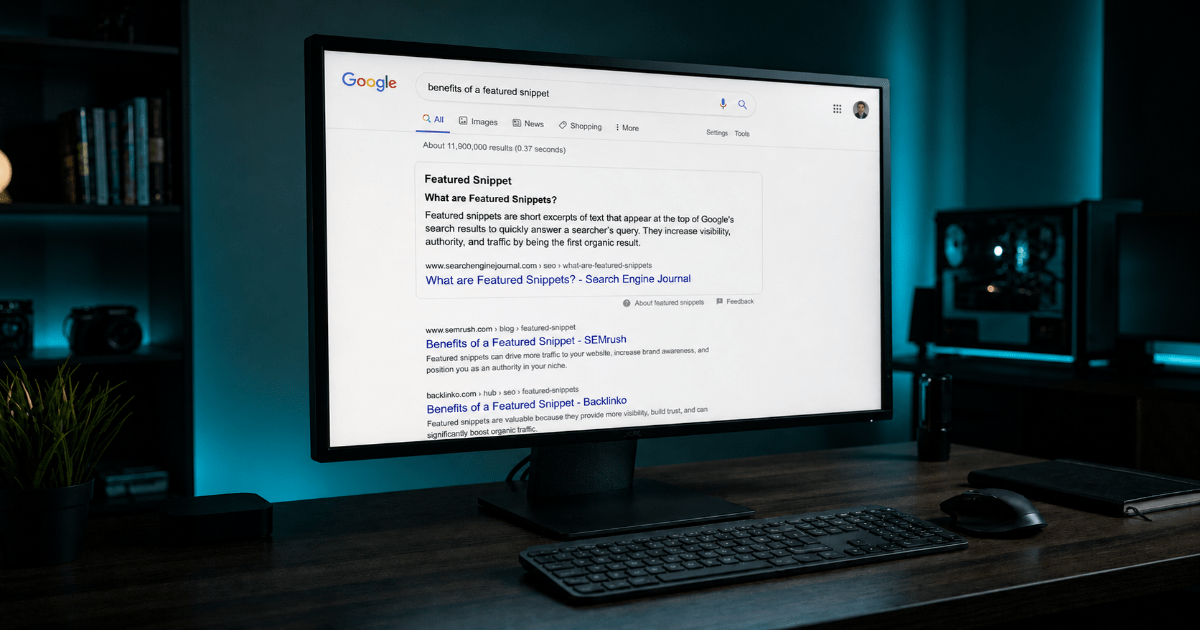
A featured snippet is Google’s method of answering a single question using one authoritative source. The format of a regular search result gets reversed, showing the descriptive snippet first. That is the technical definition from Google Search Central documentation. The implication is sharper than most realize.
Google does not build snippets from pages that try to game the format. It pulls them from pages that already answer the question clearly. The difference is subtle and critical. A page optimized for snippet formatting without a clear answer is a page Google will ignore. Most teams approach featured snippet optimization as a formatting exercise. They add list tags. They shorten paragraphs. They miss the core requirement.
The correct approach starts with the question itself. What is the user asking? Does the page answer it directly in the first paragraph? Does that answer come from a source Google trusts? Formatting only matters after those conditions are met.
This distinction changes how you prioritize work. Stop auditing your content for snippet formatting. Start auditing it for whether it answers the question better than any competing page. That is where real optimization begins..
Consider how Stack Overflow dominates snippets for programming queries. The site does not format for snippets. It formats for clear, authoritative answers. Google pulls the snippet anyway because the answer is the best one available. That is the standard to match.. Write the best answer first. Let formatting follow.
The Formats That Win and the Ones That Don’t
Three formats dominate featured snippet optimization: paragraph, list, and table. Choosing the wrong one is the fastest way to lose position zero to a competitor who matched the query structure.
Paragraph snippets answer “what is” and “why” questions. Google pulls a direct sentence or two from your content when the query demands explanation. Paragraph snippets fail when the query expects steps or comparisons.
List snippets win “how to” and “steps for” queries. Ordered lists for sequential processes, unordered for items without a required sequence. Lists fail when the answer requires more than a single level of hierarchy. Table snippets handle comparative data. Product features, pricing tiers, specification comparisons. Tables fail when the data set is too small or too large to fit the snippet window.
The winning format matches the query’s implicit structure. A paragraph for a definition query beats a list every time. A list for a procedural query beats a paragraph. A table for a comparison query beats both.
Study the current snippet for your target query. Whatever format Google chose for the top result is the format your answer must use. The featured snippet types guide from Semrush breaks down which queries trigger each format. Build your on-page content formats around that pattern. Consider a query like “how to clean a cast iron skillet.” Google shows a list snippet. A page answering with a paragraph will not rank for position zero.
Match the format of the current snippet. Then write content that answers the question more completely than the existing result. That is the only path to winning the featured snippet for that query.
Why Most Pages Never Get Selected
The standard approach to featured snippet optimization is a bet placed on formatting alone. A team writes a generic answer, wraps it in an <h2>, adds a list, and waits for Google to notice. The search engine never does.
This mistake persists because the old method feels logical. Structure the content, match the format, win the snippet. The reasoning breaks down at the moment of assumption, that Google selects the page with the best structure rather than the page that best answers the query.
Before: A content writer receives a brief to target a featured snippet for “how to reduce bounce rate.” They write a 150-word paragraph covering causes, solutions, and tools. The heading matches the query. The paragraph is clean.
The page sits at position 12 for six months. The writer blames the algorithm. The real failure was answering a question Google had already decided to answer with a list format, and delivering a paragraph instead.
After: The same writer starts by analyzing the query intent. They use a SERP analysis tool to see that Google already shows a numbered list for this query. They restructure the answer as a step-by-step list, each item a complete sentence. The page moves to position zero within three weeks. The difference was not effort. It was matching the format Google had already validated for that query.
This contrast reveals a truth most teams miss. Google is not evaluating your content in isolation. It is comparing your answer against the format it has already decided works best for that question. Writing a generic answer is not a strategy. It is a gamble on a format the search engine may never accept.
The pages that win position zero are the ones that study the current snippet, identify its structure, and deliver a better version of that same format. Nothing else matters until that step is done.
How to Find the Questions Google Is Already Answering
Most teams start writing before they know what question Google is actually featuring. That is the mistake that kills featured snippet optimization before it begins.. The process starts with discovery, not drafting, identifying the exact queries where Google has already decided to pull a direct answer into position zero.
Step 1. Run a keyword research tool that surfaces question-based queries. Filter for terms containing who, what, where, when, why, or how. These are the only queries that trigger featured snippets.
Step 2. Search each question manually and study the current snippet format. Is it a paragraph, a list, or a table? Google has already chosen the structure. Match it exactly in your content.
Step 3. Examine the snippet’s source page. Note the heading structure, the answer placement, and the supporting detail. The winning page answers the question in its first paragraph, not its third.
Step 4. Cross-reference the query with search intent optimization. A question like “how to clean suede” signals instructional intent. A question like “what is suede” signals definitional intent. The snippet format follows the intent.
Step 5. Prioritise questions where your page already has topical authority. Google selects snippets from pages it trusts on the subject. A well-formatted answer on a weak page still loses to a messy answer on an authoritative one. Completing this process reveals a shortlist of queries you can realistically win. The work shifts from guessing what Google wants to delivering exactly what it has already asked for.
This approach works because it removes guesswork entirely. The team at Ahrefs found that pages already ranking in the top 10 for a query win the featured snippet over 70% of the time. Authority beats formatting every time.
The real edge comes from speed. Most competitors will find the query, write an answer, and move on. You find the query, study the gap in the current snippet, and fill it with something the existing answer does not provide. That gap is your entry point..
The Content Structure That Triggers a Snippet
Getting the format right matters less than getting the order right. Google selects pages where the answer appears before the context, not after it. The first sentence of the answer must be a complete, standalone response to the question, no qualifiers, no setup, no background.
Write the direct answer in the opening paragraph. Then add the supporting detail in the paragraphs that follow. This structure mirrors how Google extracts content for position zero. A paragraph that starts with “The answer is X” and then explains why will always beat one that builds context first and delivers the answer last.
This is where featured snippet optimization becomes a structural discipline, not a formatting exercise. The question determines the answer structure. A “what is” query needs a definition in sentence one. A “how to” query needs an action verb and a clear sequence. A “why” query needs a causal claim stated directly.
Test the result before publishing. Use a SERP snippet optimizer tool to preview how the answer will appear in search results. The tool shows exactly where the snippet will truncate and whether the answer reads as a complete thought in the preview window. Adjust the first sentence until it works as a standalone answer.
The implication is uncomfortable for teams that treat content as a creative exercise. The first sentence of every answer is not negotiable. It must answer the question completely, in plain language, with no room for interpretation. Everything else supports that sentence. Everything else comes after it.
The same logic applies to zero-click SEO. When the answer is complete in the snippet, the user does not need to click. That is the trade-off of position zero.. The goal is to be the source Google trusts, not the page that gets the visit.
Why Authority Matters More Than Format
A perfectly structured page with zero topical authority will never hold position zero. Google’s snippet algorithm prioritises sources it trusts to be correct. Formatting is the price of entry. Authority is the deciding factor. Featured snippet optimization fails without an authority foundation.
Google’s Trust Threshold for Snippet Selection
Google does not pull a snippet from a page it does not trust. The algorithm evaluates the entire domain’s track record. A single well-formatted page on a site with no topical history rarely wins position zero. Trust accumulates through consistent, accurate content across multiple queries.
How Authority Outweighs Structural Perfection
Two pages answer the same question identically. One belongs to a site with years of topical coverage. The other is a new page on a generalist domain. Google selects the established source every time. Formatting tricks cannot compensate for missing authority.
Building Authority That Triggers Snippet Selection
Authority is built through breadth and depth of coverage on a specific topic cluster. A site with fifty articles on conversion rate optimization will outrank a site with one perfectly formatted guide. The cluster signals expertise.
This is where off-page SEO in 2026 goes beyond link building. Citations, mentions, and consistent external references reinforce the authority signal. page authority is a cumulative reputation earned across every piece of content you publish.
The Practical Shift: Audit Authority Before Format
Before restructuring a page for a snippet, audit the domain’s topical authority on that query. If the site has no existing content cluster, the snippet effort will likely fail. Write the cluster first. Optimise for the snippet second. Build authority first, then format the answer.
The Turning Point: Snippets in the Age of AI Overviews
AI Overviews did not kill the featured snippet. They changed what the snippet must do to survive. A featured snippet answers one question from one source. An AI Overview synthesises multiple sources into a single block. These are different jobs with different strengths.
The question is not whether snippets still rank. They do. The question is whether a snippet can compete for the reader’s attention when an AI Overview sits directly above it. The answer depends on what the reader actually needs.
A reader who wants a single, authoritative, verifiable answer will scroll past the AI Overview to the snippet. A reader who wants a summary of competing viewpoints will stay with the AI Overview.
This changes how you approach AI Overviews in your strategy. The snippet must now earn trust faster. The first sentence must be so specific and so clearly sourced that the reader does not need to check another result. Generic claims will lose to the AI Overview every time. Specific, defensible answers will win the click.
The turning point is not a threat. It is a filter. Pages that treated snippet optimization as a formatting exercise will disappear. Pages that built the answer on verifiable authority will hold position zero. The gap between those two outcomes is the only thing that matters now.
Consider a recipe query. The AI Overview lists ingredients from three sources. The featured snippet gives the exact baking time for a specific oven type. One is useful. The other is.
Make Position Zero Your Default, Not Your Goal
Featured snippet optimization reshapes how a team writes, not a formatting trick applied after the fact. The distinction determines whether position zero becomes a reliable outcome or a rare accident.
A team that treats every new article as a snippet opportunity builds a library of pages that answer questions directly and authoritatively. That library earns compound returns, and each page becomes more likely to hold position zero as the domain’s topical authority grows. Teams that wait to retrofit old content will always be catching up.
Audit your existing content against the methods in this article. Identify queries where Google is already featuring an answer and your page is not. Rewrite those pages with the answer first, the format matched, and the authority earned. WryveAI can help surface those opportunities faster. Make position zero the default, not the goal.
Every claim in this article was checked against a real source before it was published.
WryveAI researches live search results, writes source-verified content, and publishes straight to WordPress, all in one platform.
Try WryveAI Free →No credit card required.
Frequently Asked Questions About Featured Snippet Optimization
What is featured snippet optimization?
Featured snippet optimization is the process of structuring content so it becomes the direct answer Google displays at the top of search results. It requires analyzing the exact question Google is already featuring and building your answer around that specific query intent, not just formatting your page for a snippet box.
How to optimize for Google’s featured snippets?
Optimizing for featured snippets starts with identifying the exact question Google is already answering in position zero for your target keyword. From there, the answer must be written as a single, direct, standalone sentence placed before any supporting detail or context.
Are featured snippets still relevant?
Featured snippets remain relevant because they provide a single authoritative answer that users can trust, unlike AI Overviews which combine multiple sources into a single response. A featured snippet still drives measurable traffic because it occupies the most visible position on the page and earns higher click-through rates than any other organic result.
Can I control my featured snippet?
No one controls which page Google selects for a featured snippet, but the probability of being chosen increases dramatically when the content structure matches the format Google already uses for that query. The most reliable approach is to study the current snippet holder and build a page that answers the same question with greater clarity and authority.


